
If you’ve ever stood in a showroom with a customer who’s torn between a gorgeous cedar tub and a glossy acrylic one, you already know this isn’t a small decision. It’s the one that decides whether you’ll be fielding thank-you emails or warranty calls eighteen months from now. For anyone buying in volume, the stakes are higher still: you’re not choosing one tub, you’re choosing what ends up on forty pallets.
So let’s talk about it properly. No brochure language, just what actually differs between acrylic and wooden hot tubs, where each one makes sense, and how to pick a wholesale supplier who won’t leave you stranded when something goes wrong.
First, what “wooden” and “acrylic” really mean
This is where the confusion starts, because the two words describe different things. A traditional wooden hot tub is built the way a barrel is: vertical staves of timber held together by metal or composite hoops, with the wood itself touching the water. That construction is closely tied to regions with a strong cooperage tradition, which is why so much of it comes out of the Baltics and Scandinavia.
An acrylic hot tub, on the other hand, has a moulded acrylic shell on the inside, usually reinforced with fibreglass behind it, and the wood is only used on the outside as cladding. So when people say “wooden” they often mean one of two quite different products: all-wood from the inside out, or an acrylic tub that simply looks like wood. Keep that distinction in mind, because it changes every comparison below.
Hygiene and maintenance: where the gap is widest
Wood is porous. That’s the honest starting point. Even well-treated timber holds moisture, and a surface that holds moisture needs scrubbing, resealing, and eventually replacing. Purely wooden tubs are more demanding to clean and sanitise than acrylic-lined alternatives, and their lifespan tends to be shorter. That’s not a knock on the craft, it’s just physics.
Acrylic doesn’t have that problem. It’s non-porous, so algae and bacteria have very little to hold on to, and it stands up to the chlorine and bromine used in commercial water treatment. For a guest-facing property where a tub gets used night after night and cleaned between check-ins, that’s a big deal. Less scrubbing means fewer staff hours, and fewer staff hours is the kind of thing that shows up directly in a property’s margins.
If the tub is going to be used by paying guests, hygiene isn’t a feature, it’s the baseline. That’s why most hospitality buyers end up looking at acrylic first.
Durability and lifespan
A good acrylic liner is thick. Memelwood’s, for example, is roughly twice the thickness of a typical fibreglass shell, which matters because thickness is what resists scratches, chemical wear, and UV fading over years of use. It also keeps a glossy finish, which sounds cosmetic until a customer sees a five-year-old tub that still looks new.
Wood can last a long time too, but it asks something in return: regular oiling or sealing, attention to the hoops, and careful handling during dry spells so the staves don’t shrink and leak. Treat it well and it’s lovely. Neglect it, and you’ll be dealing with the consequences. For a dealer, that’s a customer-service burden you’d be signing up for with every sale.
Side by side
| Factor | Acrylic (wood-clad) | All-wooden |
|---|---|---|
| Interior surface | Non-porous, glossy, easy to wipe down | Porous timber, needs regular treatment |
| Maintenance | Low | High |
| Chemical resistance | Strong against chlorine and bromine | Limited, depends on timber and finish |
| Typical lifespan | Long, with minimal upkeep | Shorter unless carefully maintained |
| Look and feel | Modern, hotel-grade, with a wood exterior | Authentic, rustic, very traditional |
| Best for | Hospitality, rentals, retail, mixed-use | Purists, private owners who enjoy the ritual |
So is wood ever the right answer?
Yes, and it’d be dishonest to pretend otherwise. If your customers are specifically asking for the traditional barrel experience and they’re happy to accept the upkeep that comes with it, an all-wooden tub is a perfectly credible product. Brands like Kirami in Finland have built a following on exactly that. Some people simply love the smell, the look, and the routine of looking after it.
But for most buyers in the trade, there’s a middle path that has quietly become the standard: an acrylic interior wrapped in real timber. Thermowood, WPC, or spruce cladding gives you the warm, natural look on the outside, while the acrylic does the hard work on the inside. You get the aesthetic without the maintenance headache, which is why it’s the format we see most often in European wholesale catalogues.
Eight models that show how the hybrid approach looks in practice
Here’s what the acrylic-and-wood combination looks like across a few of the formats currently available through wholesale channels.
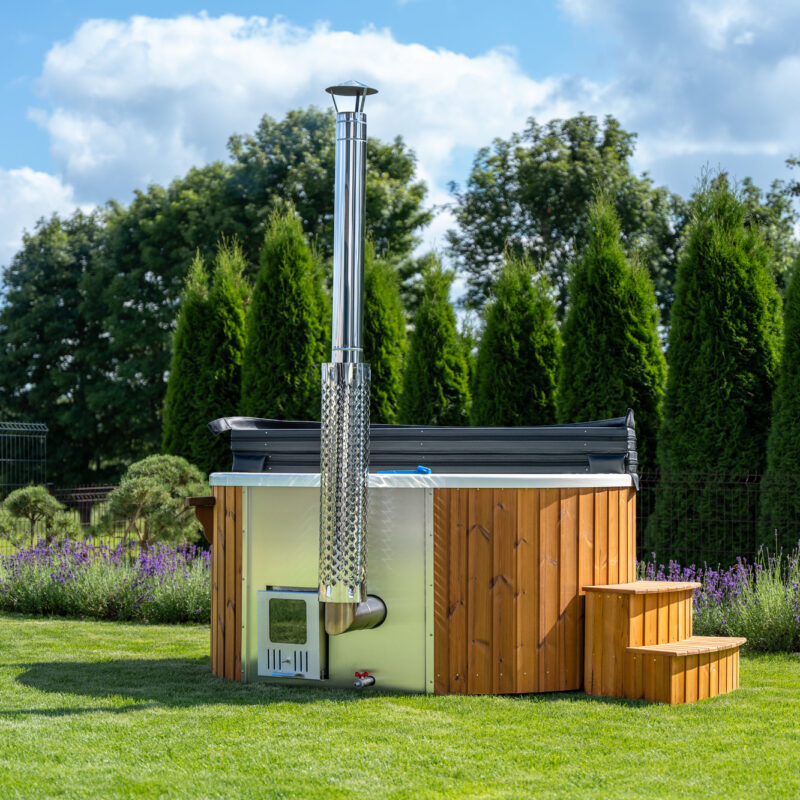
The most popular round acrylic model in the range, and a sensible first order for a new dealer. It’s compact, familiar, and easy to sell.
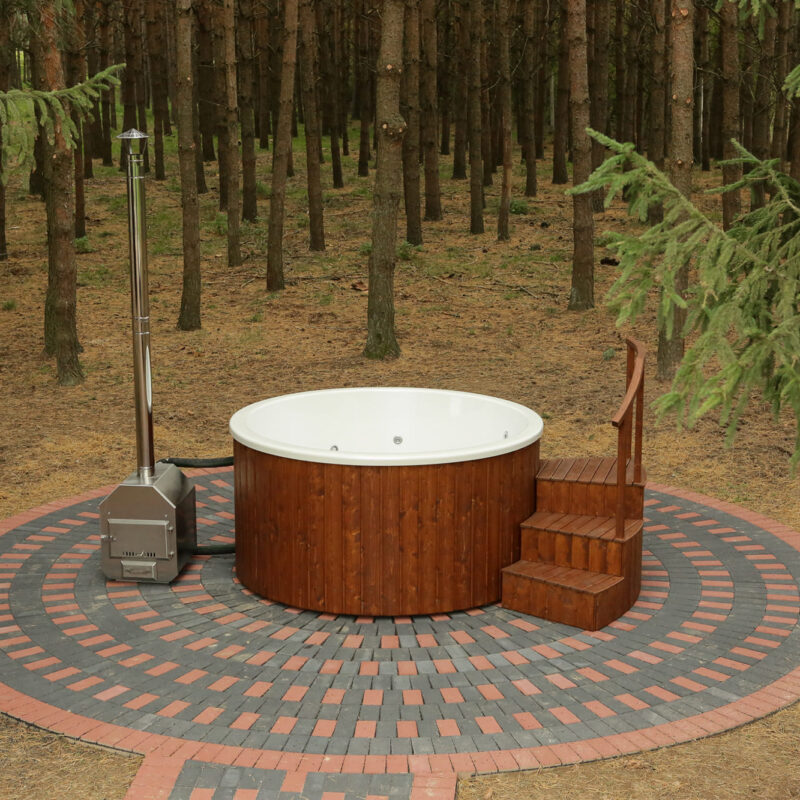
Moving the heater outside frees up the full interior for seating, and spruce keeps the price sensible. A solid workhorse for communal and resort settings.
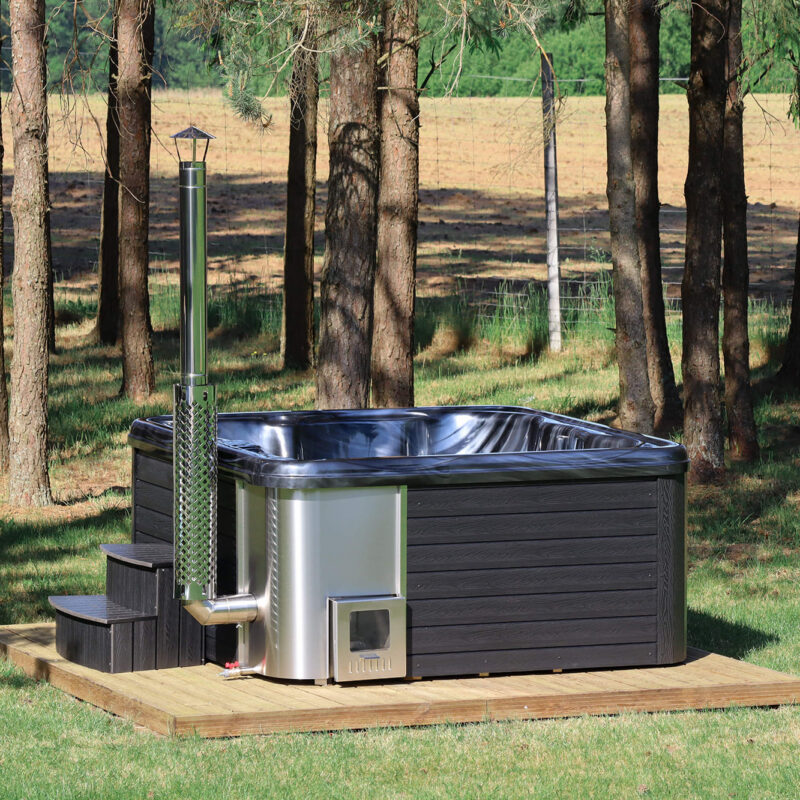
Seats six, including a full-length lounger, with air and hydro massage built in. It measures 220 × 220 cm with about 1,100 litres of water, and the corner-mounted heater gets it up to temperature in around two hours. This is usually the model that wins bookings for rental properties.
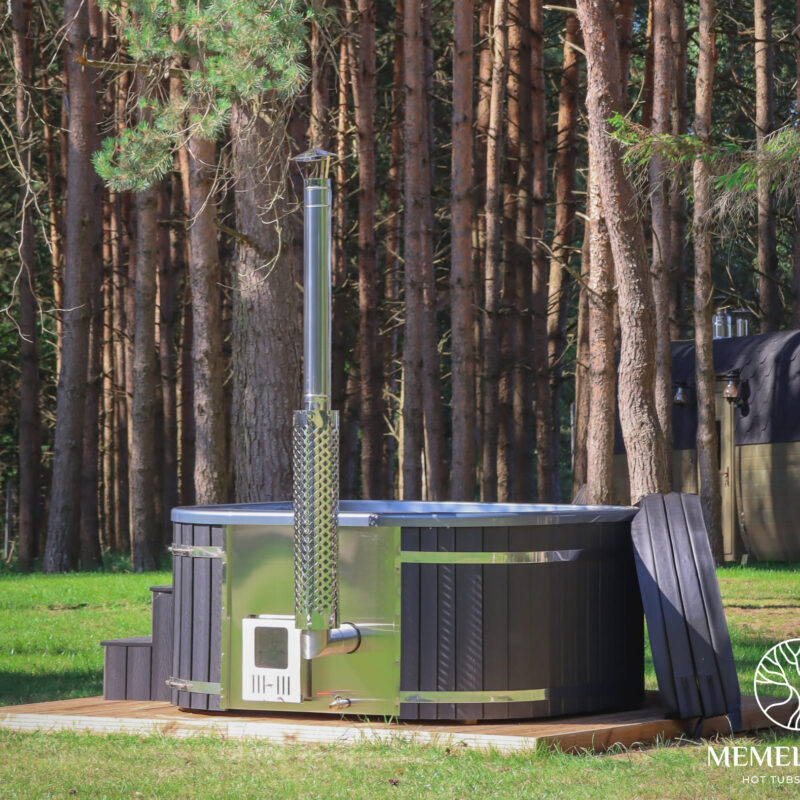
Square shapes fit modern terraces and decking far better than round ones, which is why architects and developers keep asking for them.
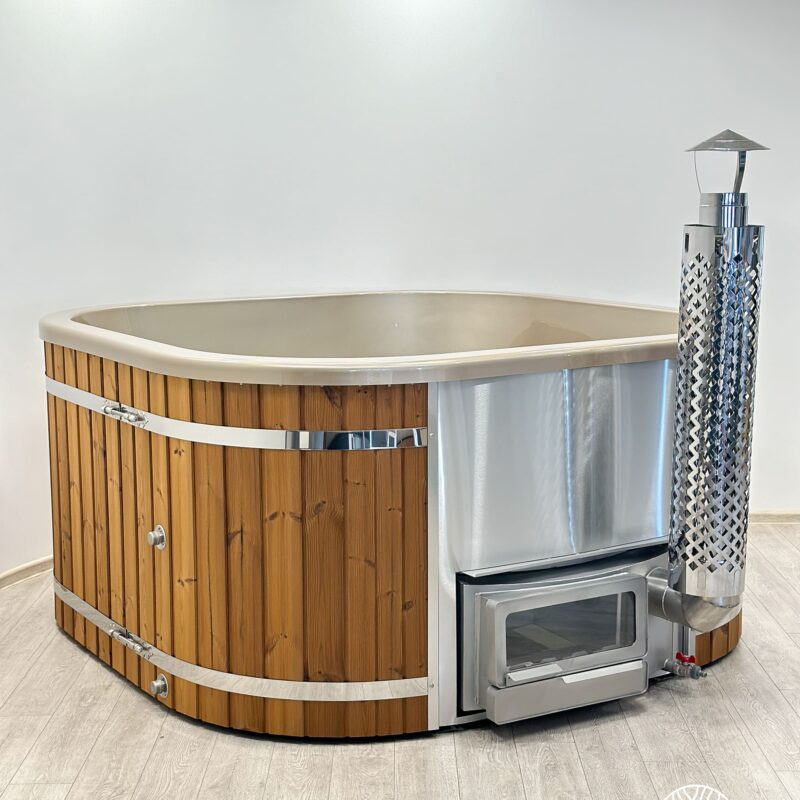
The premium square option. The glass-door heater doubles as a design feature, which matters if the property sells on looks.
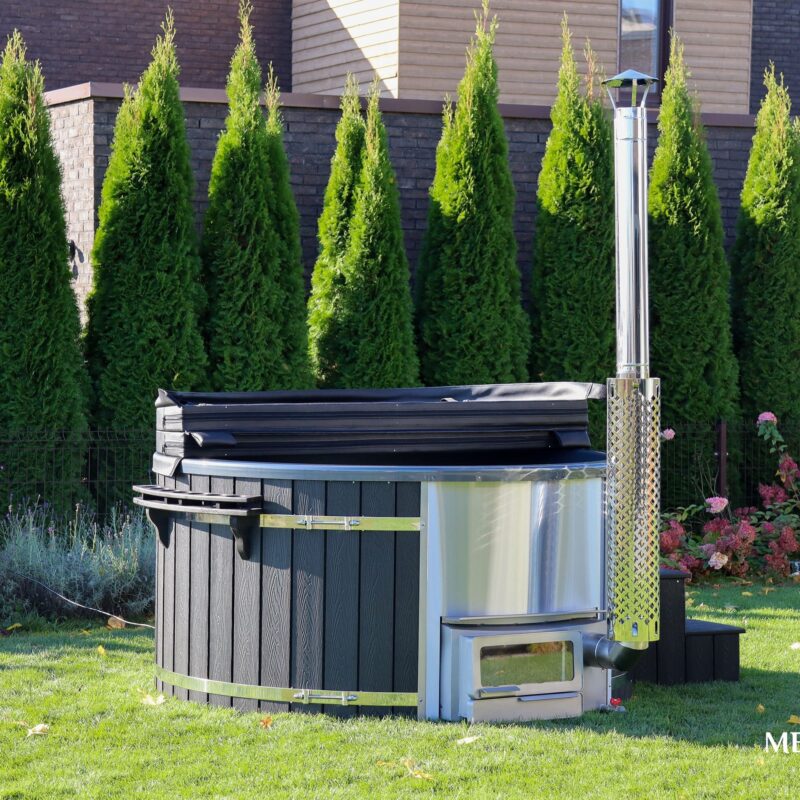
Same glass-front look in a round format. It photographs beautifully at dusk, which is not a small thing for a business that markets itself online.
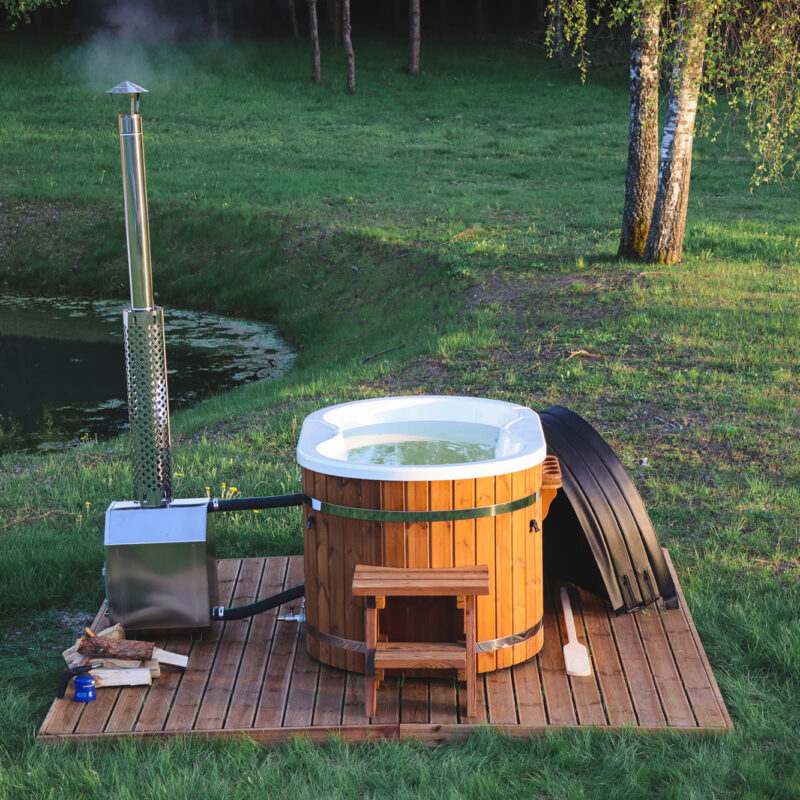
A deep-soak bath for two. Low water volume means quick heat-up, which suits short-stay guest rotations.
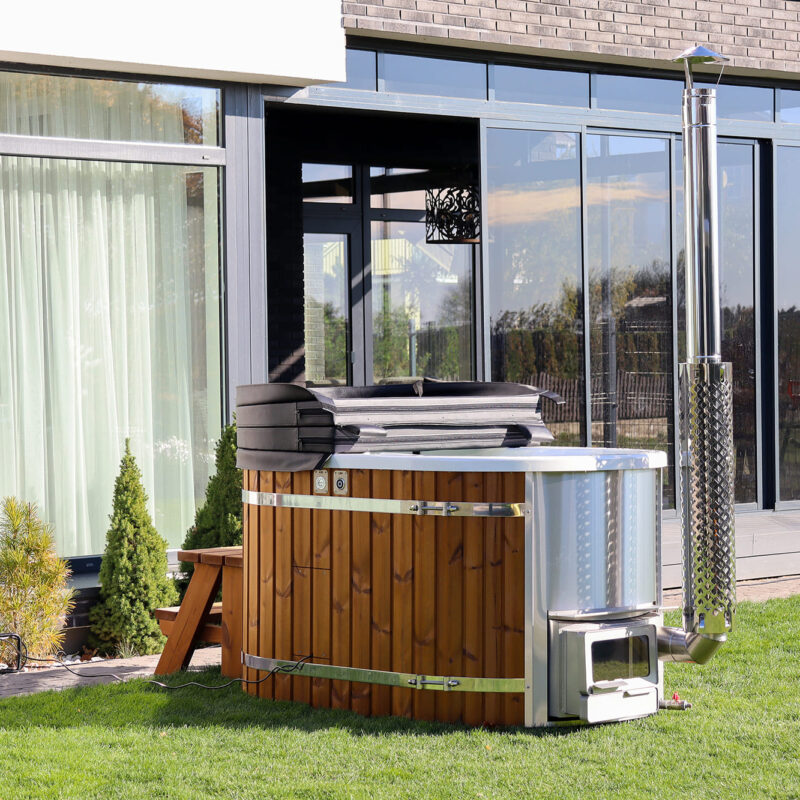
The tidier version of the same idea, with the heater built in for a cleaner silhouette and a smaller footprint.
Choosing a wholesale supplier without regretting it
Material is only half the decision. The other half is who you buy from, and this is where plenty of buyers get burned. A few things are worth checking before you commit to a container.
- Factory or reseller? Buying directly from a manufacturer removes the middleman, which protects your margin and makes spare parts far easier to get later. Ask outright.
- Real production history. Years in business and units shipped are imperfect but useful proxies. A manufacturer that has built thousands of tubs has already run into problems a newer entrant hasn’t.
- Volume-based pricing. Serious suppliers price in tiers. Come with a realistic twelve-month forecast, because vague numbers get you vague quotes.
- Customisation and OEM options. Cladding, liner colours, heaters, filtration, even your own branding. Find out what’s possible and what the minimum order is.
- Warranty you can actually use. Two years is the industry benchmark. What matters more is whether replacement parts ship quickly and whether support is available in your language.
- A sample before the big order. Photos and brochures flatter everything. Run your hand along the acrylic and inspect the cladding joints in person.
Why Europe is a good place to source from
For buyers serving European customers, there are practical reasons to stay in the region. CE compliance is straightforward, shipping within the EU is simpler, and climate-appropriate engineering counts for a lot when a tub has to survive a Nordic winter. Lithuania in particular has become a quiet powerhouse here, thanks to a long timber tradition and factories built for export.
Memelwood is one example: a Lithuanian manufacturer with more than 17,000 units produced, partners across 22 European countries, and a two-year warranty on its range. If you want to see how it stacks up against other names, there’s a side-by-side look at European hot tub brands compared, a longer buyer’s guide to hot tub suppliers in Europe, and a deeper dive into the best acrylic spa products.
The short version
If your customers are guests, renters, or anyone who wants a tub that just works, go acrylic with real wood cladding. If they’re purists who enjoy the upkeep, all-wood is a legitimate niche, just go in knowing what you’re signing up to support. And whichever way you lean, buy from a manufacturer, ask for a sample, and get the warranty terms in writing.
Ready to compare wholesale options? Browse the wholesale hot tubs range or see the full acrylic hot tub collection.
Related reading: The Complete Guide to Hot Tubs: Manufacturing, Types and Buying in Europe · Jacuzzi Suppliers Guide · Top Hot Tub Manufacturers in 2026