
There’s something very British about sitting in a tub of hot water in the drizzle with a mug of tea, a woodburner crackling beside you, and not a single plug socket in sight. Wood-fired hot tubs have gone from a glamping curiosity to a proper garden fixture over the last few years, and 2026 looks set to keep that going. The trouble is that the market is crowded, the marketing is loud, and the differences that actually matter are rarely the ones in the headline.
So this guide does it a bit differently. Rather than handing out stars, I’ll walk through what really separates one wood-fired tub from another, which brands and sellers keep coming up in the UK, and where a Lithuanian manufacturer like Memelwood fits in. I’ll be upfront about one thing: this article sits on Memelwood’s own site, so take the section about them with the same pinch of salt you’d apply to any brand writing about itself. The rest I’ve tried to keep straight.
Why wood-fired is having a moment in the UK
It’s partly the obvious stuff. No electrical hookup means you can put a tub at the bottom of the garden, on a smallholding, or at a holiday let without calling an electrician. It’s quiet, there are no jets droning on, and the whole ritual of lighting the stove and waiting for the water to warm up is part of the appeal. Running costs are also hard to beat if you’ve got a supply of seasoned hardwood.
There are trade-offs, and anyone who tells you otherwise is selling something. Heat-up is slow compared with electric: a typical wood-fired tub can take three to four hours to reach a comfortable temperature, though smaller tubs can get there in around ninety minutes. You’ll also need dry, well-seasoned hardwood, because resinous softwoods like pine can leave deposits in the stove. And you’ll be draining and refilling more often than you would with a sealed electric spa.
The three things that really separate wood-fired tubs
1. What’s on the inside
This is the big one. A traditional all-wood tub has timber touching the water, which looks wonderful and needs regular care. Cedar can last fifteen to twenty years if it’s looked after, but it asks for drain-and-wipe routines and a bit of attention to the surface. Tubs with an acrylic or fibreglass liner take most of that upkeep away, because the liner is non-porous and cleans in minutes. If you’re buying for rental guests, or you simply don’t want a weekend chore, a liner makes life a lot easier.
2. Where the heater lives
Internal heaters sit inside the tub and keep the footprint tight, at the cost of a little seating space. External heaters free up the interior and tend to be easier to service, but take up more room around the tub. Neither is “better”. It comes down to how many people you want in the water and how much space you’ve got.
3. Who stands behind it
A glossy photo tells you nothing about how a company handles a cracked stave or a leaking fitting in month fourteen. Look for a stated warranty, a clear route to spare parts, and ideally a seller who’s actually in the UK. That last one matters more than people think once you factor in delivery and returns.
The best wood-fired hot tub isn’t the prettiest one in the brochure. It’s the one you can still get parts for in three years’ time.
The names that keep coming up
A quick caveat: some of the names below are manufacturers, others are UK retailers who sell tubs built elsewhere. That distinction matters, because it affects who handles your warranty. I’ve kept my descriptions deliberately light, so check current specs and terms directly with each seller.
| Name | What they are | Worth knowing |
|---|---|---|
| Kirami | Finnish manufacturer with a dedicated UK site | Known for traditional, cold-climate wood-fired tubs with a Nordic lake-house look. Mostly timber-heavy, so expect more upkeep than a liner-based tub. |
| Baltic Hot Tubs | UK seller of wood-fired hot tubs and saunas | A UK-based route to Baltic-built tubs, which can simplify delivery and support. |
| Royal Tubs | UK seller of wooden hot tubs | Focused on the traditional wooden format. |
| Tentsmuir Trading | UK retailer with a wood-fired hot tub collection | Useful if you want to compare several tubs in one place. |
| Memelwood | Lithuanian manufacturer, direct from the factory | Acrylic or fibreglass interiors with thermowood, WPC or spruce cladding. Sold to dealers and trade, so most UK buyers will meet it through a reseller. |
Where Memelwood fits
Memelwood makes hot tubs in Telšiai district, Lithuania. By its own figures it has built more than 17,000 tubs, exports to 22 European countries, and offers a two-year warranty across the range. The company doesn’t make all-wood tubs in the traditional sense. Instead, it builds an acrylic (or fibreglass) shell and wraps it in real timber, which is a very different proposition from a straight cedar barrel.
In practice that means you get the look people want from a wood-fired tub, with a liner that wipes clean and doesn’t need the same babysitting. Its acrylic liners are roughly twice as thick as fibreglass, and the heaters are stainless steel (AISI 304 or 316 depending on the model). One example is the Jacuzzi-style model, which seats six including a lounger, holds around 1,100 litres, and uses a corner-mounted 30 kW wood-burning heater that brings the water up to temperature in about two hours.
Two honest notes for UK readers. First, Memelwood is a factory-direct, wholesale-oriented business, so if you’re a homeowner you’ll normally be buying through a dealer rather than ordering a single tub from Lithuania. Second, I haven’t verified UK-specific certification or delivery terms, so if you’re importing, ask about current UK conformity requirements before you order. For a closer look at how Memelwood compares to other European manufacturers, there’s a European hot tub brand comparison and a longer guide to hot tub suppliers in Europe.
Eight wood-fired-ready models to look at
If you’re weighing up the liner-and-timber approach, here’s what it looks like across Memelwood’s formats.
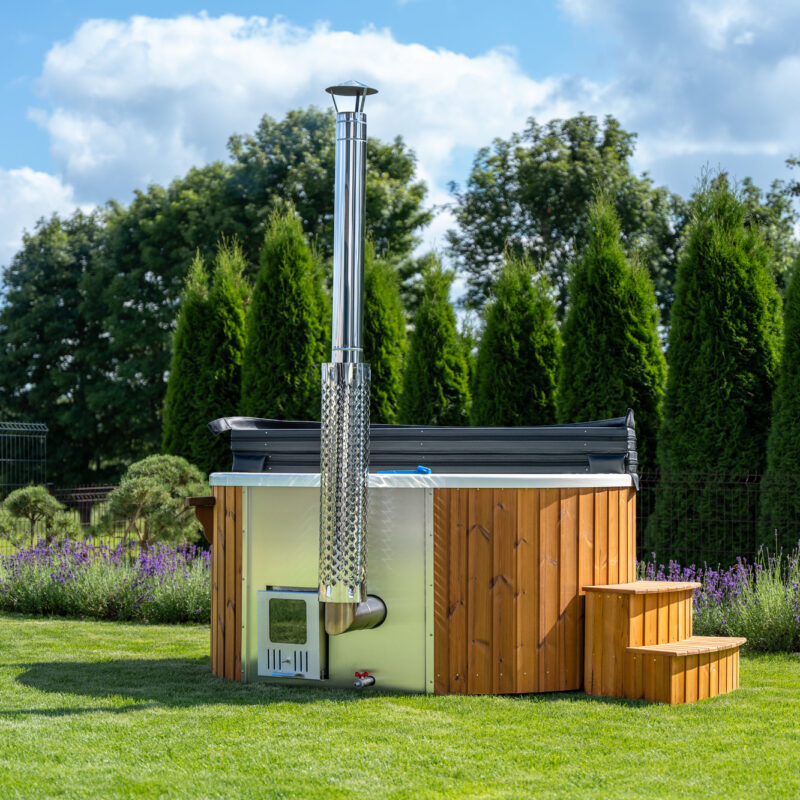
The classic. Compact footprint, familiar round shape, and the integrated stove keeps everything tidy in a smaller garden.
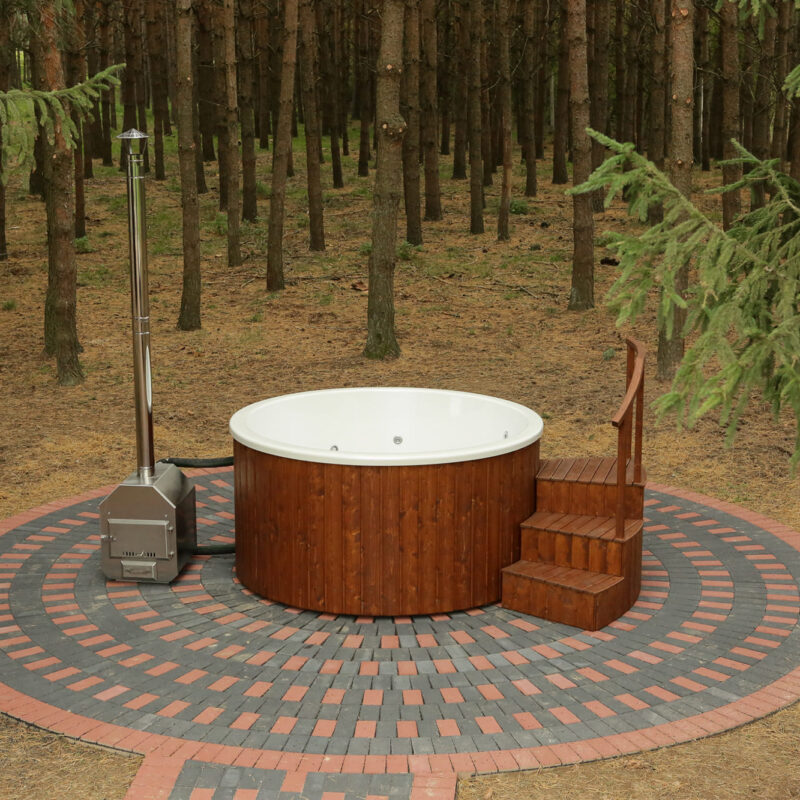
With the stove outside, the whole interior is seating. Spruce cladding keeps the price friendly for bigger families.
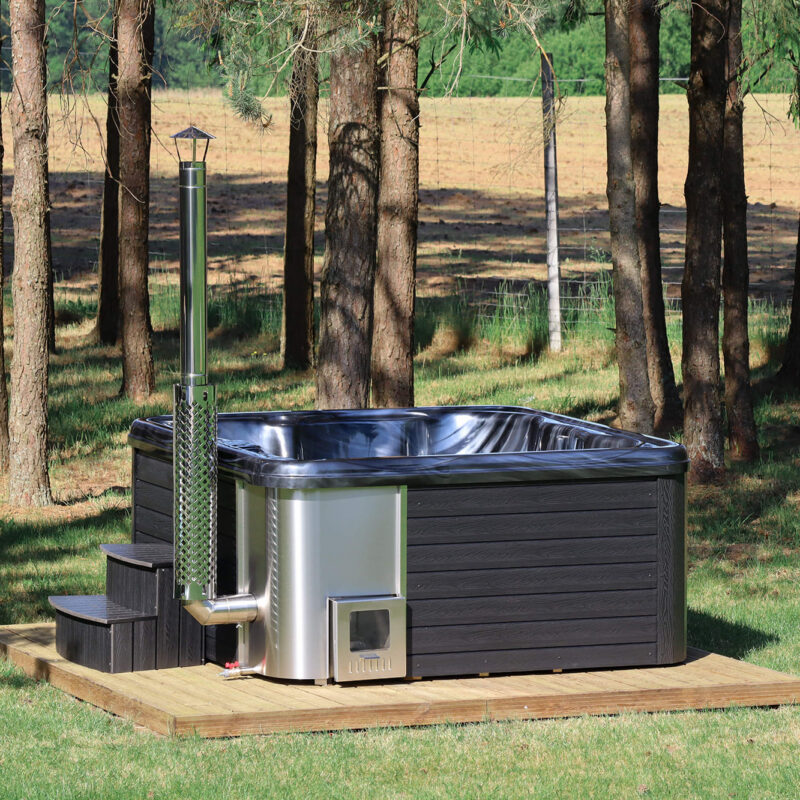
For anyone who wants jets as well as a fire. Wood-fired heating with air and hydro massage is a combination you don’t see everywhere.
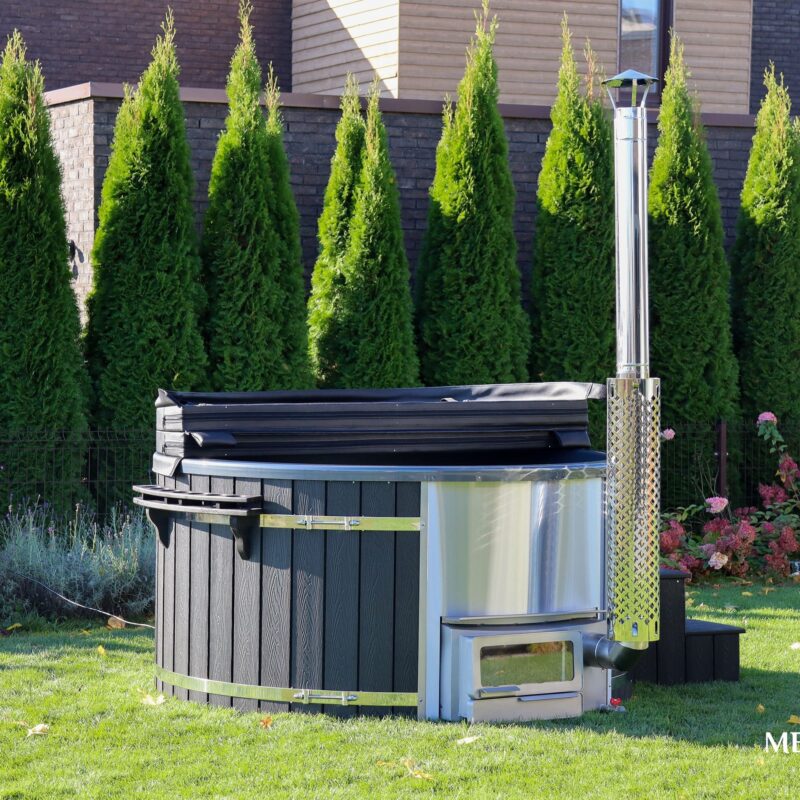
The glass door lets you watch the fire, and it looks good after dark. A lovely centrepiece for a patio or decked area.
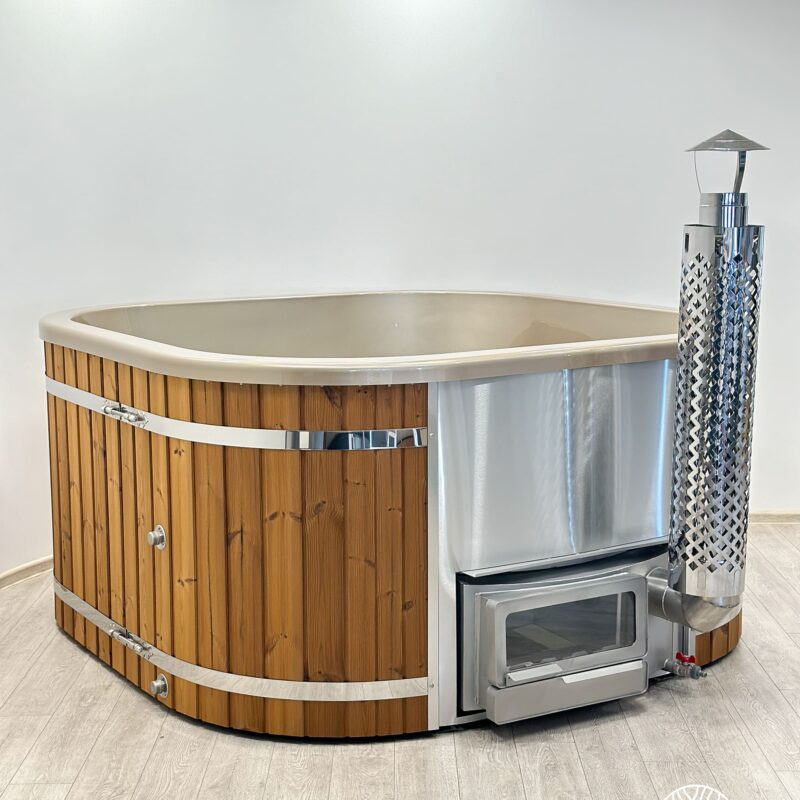
A squarer, more contemporary take, which sits neatly against modern decking and garden rooms.
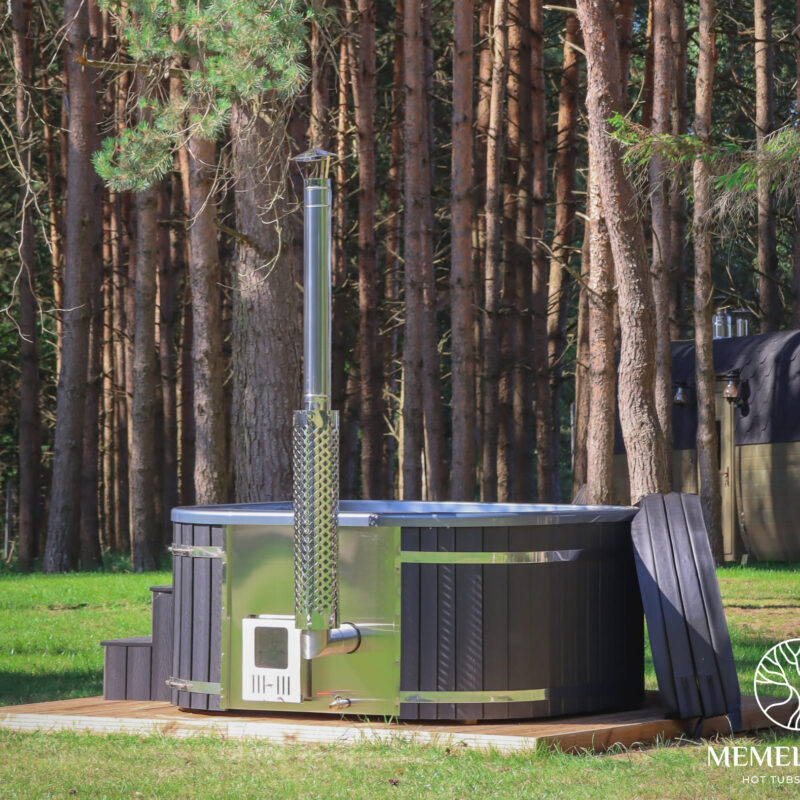
WPC cladding is the low-fuss option: it doesn’t need oiling, which is handy if your tub lives out in the rain most of the year.
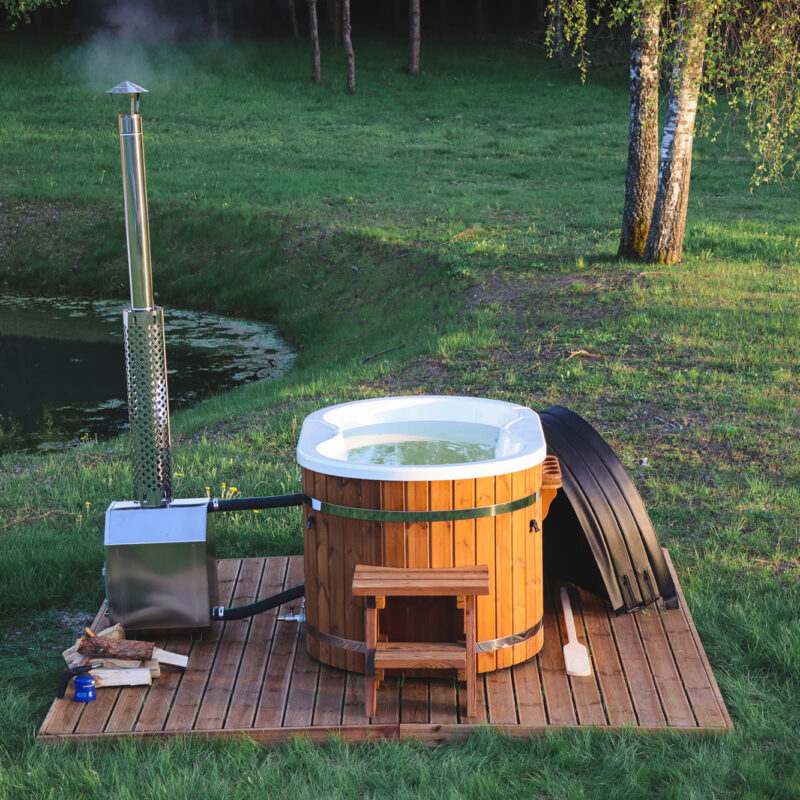
A deep soak for two. Less water means quicker heat-up, which is a real advantage when you’re relying on a wood fire.
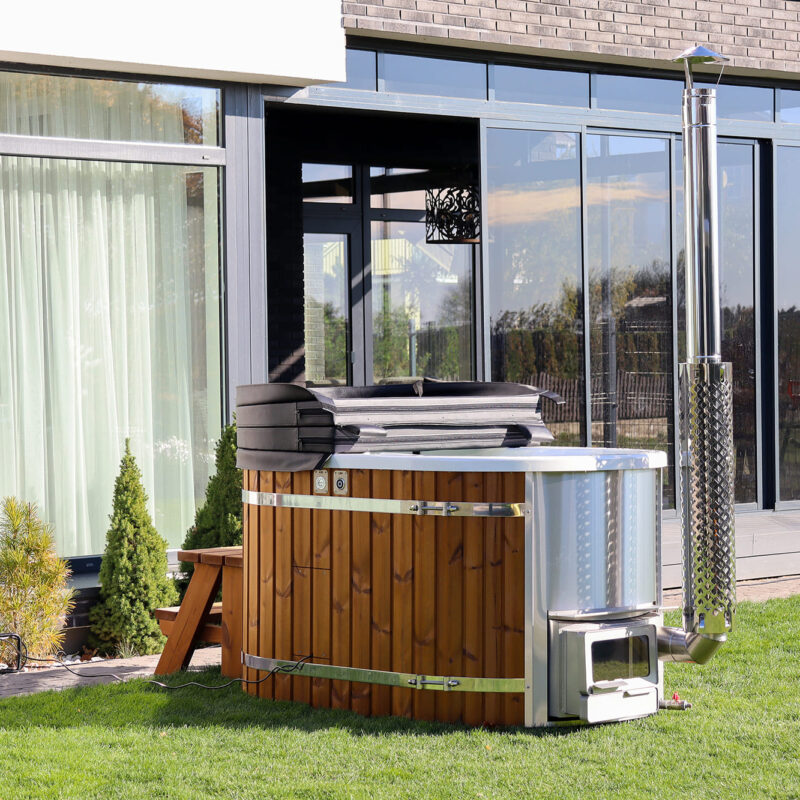
The same idea with the stove built in, for tighter spaces where every centimetre counts.
Practical tips before you buy in the UK
- Think about the weather. A good insulated cover earns its keep quickly. It cuts heat loss and keeps rain and leaves out of the water.
- Plan fire safety. Keep the stove a sensible distance from fences, sheds and overhanging branches, and check any local or rental rules before you light up.
- Buy fuel in advance. Properly seasoned hardwood makes a big difference to heat-up time and stove life.
- Measure the access route. A round tub that won’t fit through your side gate is a very expensive lesson.
- Ask about warranty and parts. Two years is a reasonable benchmark. What matters is whether parts actually turn up.
- Consider a hybrid. Some tubs can run on wood and electric heating, which helps on cold weeknights when you don’t want to wait three hours.
So which should you pick?
If you love the full traditional experience and don’t mind the upkeep, a timber-heavy tub from a name like Kirami is a perfectly respectable choice. If you want the wood-fired look with less maintenance, a liner-based tub with timber cladding is worth a serious look, and that’s the lane Memelwood plays in. And if you’re a UK business wanting to stock tubs, a factory-direct supplier is worth a conversation. There’s more on that in the wholesale hot tubs buyer’s guide and the overview of spa brands in 2026.
Stocking or sourcing for a UK business? Have a look at the wholesale hot tubs range or the full acrylic hot tub collection.
Related reading: Best Acrylic Spa Products in 2026 · Hot Tub Brands Compared · Hot Tub Suppliers in Europe