
The hot tub that’s perfect for a Vilnius rooftop apartment is a terrible fit for an off-grid cabin in the Alps. Same product category, completely different requirements. Get the match wrong and you end up with a tub that’s too heavy for the balcony, too complicated for holiday-let guests, or dependent on electricity a remote site simply doesn’t have.
This guide walks through the main European property types and the hot tub models that actually suit each one. It’s written with dealers, developers and hospitality buyers in mind, but if you’re a homeowner trying to figure out what fits your plot, the same questions apply — space, power, climate and how much maintenance you’re willing to do.
Start With Four Questions
Before you look at a single model, answer these. They narrow the field faster than any spec sheet.
- How much space and what access? Can a tub physically get to the spot — through a gate, up a stairwell, onto a roof?
- Is there power and water on site? This decides wood-fired versus electric before anything else.
- What’s the climate? A tub in northern Finland has very different insulation and cover needs than one on the Spanish coast.
- Who operates and maintains it? An owner who enjoys the ritual is one thing; rotating holiday-let guests are another.
With those answered, the property types below more or less sort themselves.
City Apartments, Rooftops and Balconies
Space and weight are everything here. A full six-seater loaded with water can weigh more than a small car, which most balconies and roof terraces can’t take. The answer is compact: a small round tub or a Japanese-style ofuro soaking bath that seats one or two, uses less water, and heats quickly.
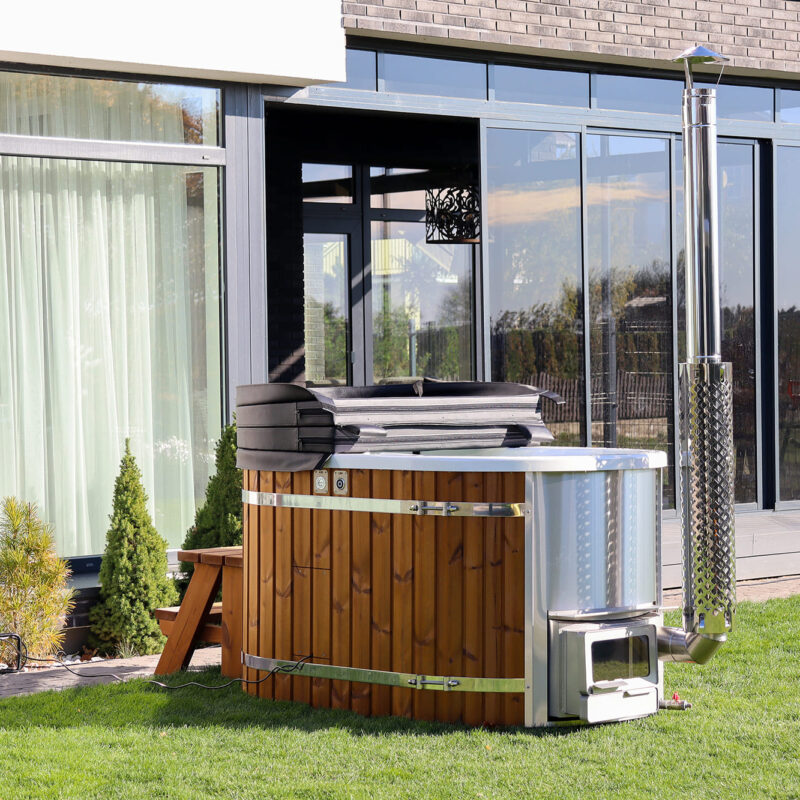
Go electric where you can — most urban buildings won’t allow a wood fire on a balcony anyway, and a plug-in acrylic tub keeps things clean and simple. Always check the structural load rating before you sell into this segment; it’s the one place where getting it wrong is genuinely dangerous.
Suburban Family Homes and Gardens
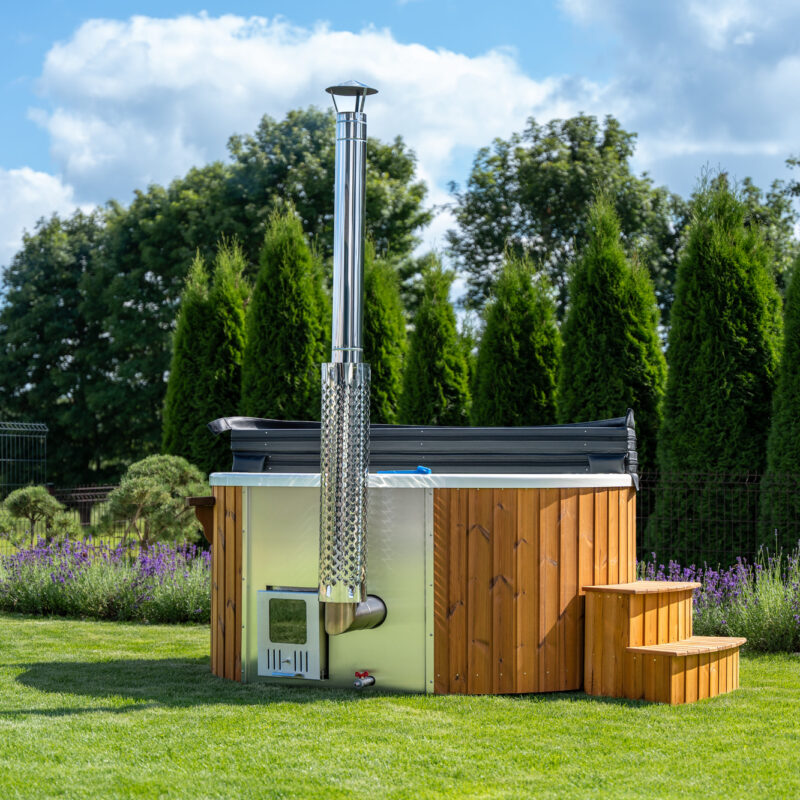
This is the sweet spot for most sales, and the easiest to get right. There’s usually room, a power supply and a solid patch of ground for a base. A lined round or square tub with thermowood cladding and an integrated heater does everything a family wants — seats four to six, looks good, and doesn’t demand constant attention.
For buyers who want to trade up, this is where a jacuzzi model with jets and massage earns its keep — the family wellness upgrade that turns a nice garden into the reason everyone comes over on weekends. The fibreglass and acrylic range covers both the standard and the premium end.
Rural Cottages and Off-Grid Cabins
No electricity? No problem — this is exactly what wood-firing was made for. A tub with an external stove heats entirely on firewood, needs no mains supply, and fits the rustic setting perfectly. Mounting the stove outside the tub also frees up bathing space and keeps the hot unit away from bathers.
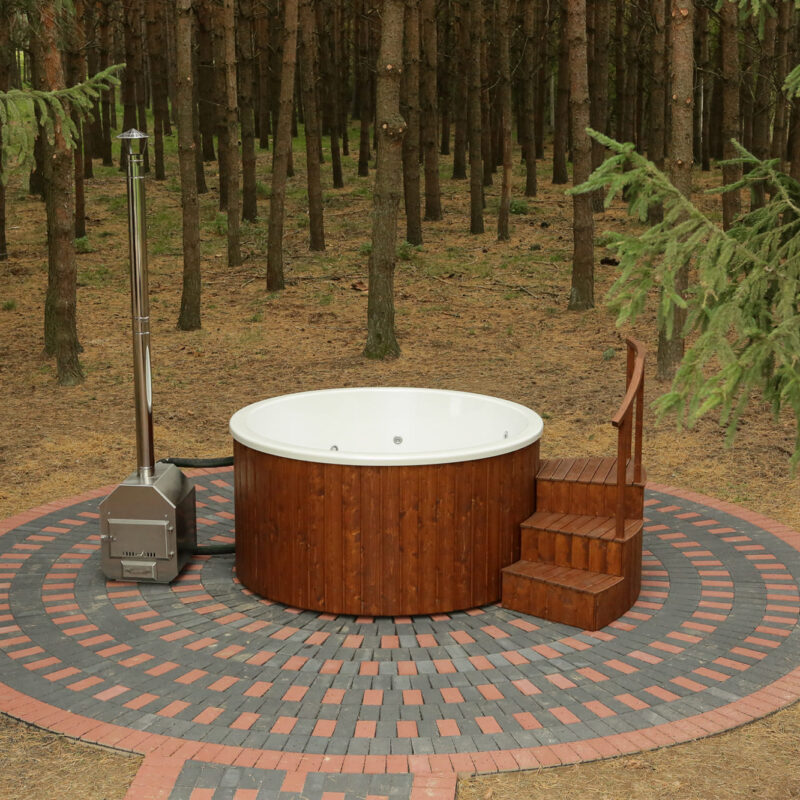
For these sites, lean toward a durable lined shell rather than pure spruce. A remote cottage rarely gets the annual oiling an all-timber tub needs, so a low-maintenance liner pays off over the years. If you want to compare stove placements, the external-heater model is a good reference.
Glamping Sites and Eco-Lodges
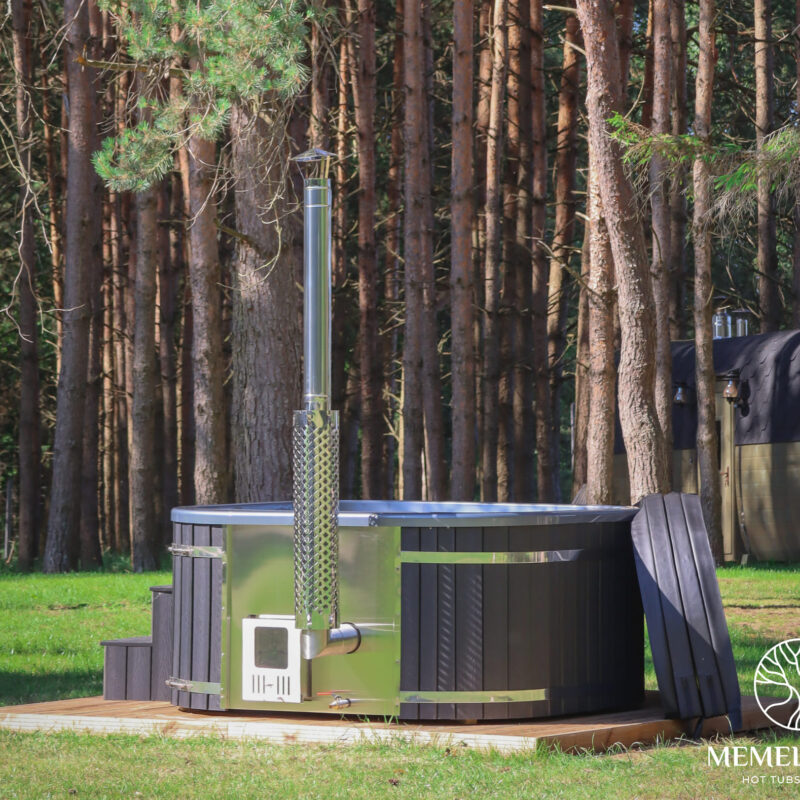
Glamping operators buy in quantity and run their tubs hard, so durability and easy upkeep beat everything else. A wood-fired tub is often the right call here — guests love the fire ritual, and off-grid pods may not have the power for electric heating anyway. But choose a lined model that survives back-to-back bookings without babying.
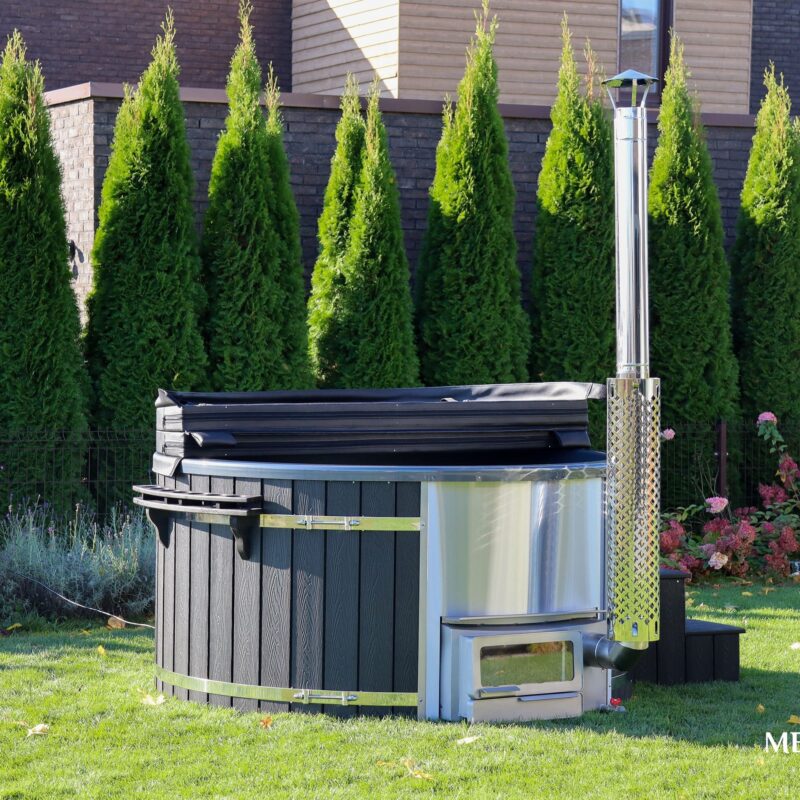
If you’re kitting out several pods, this is also where a volume order and consistent spec matter — you want the same model across the site so staff learn one routine and you stock one set of spare parts. That’s a conversation worth having directly with the factory via a wholesale quote.
Boutique Hotels and Wellness Spas
Here the tub is part of the guest experience and the brand, so presentation and reliability come first. Premium thermowood cladding, a proper jacuzzi with jets and LED lighting, and — for staff-managed properties — always-ready electric or heat-pump heating so a guest never waits for the water to warm up.
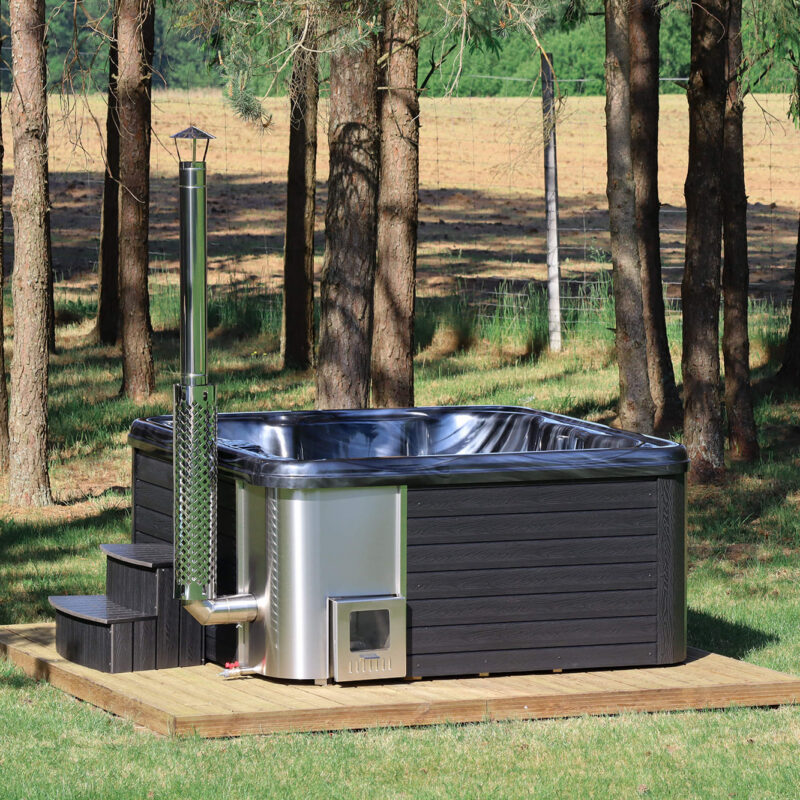
Boutique properties often want something that isn’t in every catalogue, which is where custom sizing, cladding and branding come in. A manufacturer that handles made-to-order work lets a hotel match the tub to its interior rather than the other way round.
Holiday Rentals and Short-Term Lets
The golden rule for rentals: guests will operate it, so it has to be idiot-proof and hard to damage. Skip anything fiddly. A lined tub with simple controls, robust materials and a straightforward heating system means fewer support calls and less turnover damage between stays.
Electric or heat-pump spas often win here because there’s no fire to manage and no risk of a guest scorching a stove or the decking. Where the setting calls for wood-fired, a clear one-page instruction card by the tub saves a lot of headaches. Either way, choose materials that clean up fast between check-outs.
Large Resorts and Commercial Wellness
At scale, it’s rarely one model. Resorts typically mix always-on acrylic heat-pump spas for high-traffic areas with a statement wood-fired tub or two for atmosphere. Commercial-grade durability, easy servicing and a supplier who can deliver repeat orders on schedule matter more than any single feature.
This is private-label territory too — larger operators often want their own branded range, which means partnering with a factory that can handle OEM volume without lead times slipping.
Don’t Forget Climate
Two properties of the same type can still need different tubs depending on where they are:
- Nordic and Baltic: prioritise insulation, a high-output stove or heat pump, and a well-fitting cover to hold heat through long cold spells.
- Central Europe: the all-rounder territory — most standard lined models work well year-round.
- Mediterranean and coastal: think about UV exposure, cooling in summer, and salt-air resistance; thermowood and quality liners hold up better than untreated softwood.
Quick Match-Up
| Property Type | Recommended Model | Heating | Why It Fits |
|---|---|---|---|
| Apartment / rooftop / balcony | Compact tub or ofuro | Electric | Low weight, small footprint, no open fire |
| Family garden | Lined round/square (4–6p) | Integrated wood or electric | All-round, low upkeep, upgrade path to jacuzzi |
| Off-grid cabin | External-stove lined tub | Wood-fired | No power needed, rugged, more bathing space |
| Glamping / eco-lodge | Durable lined wood-fired | Wood-fired | Guest experience + survives heavy use |
| Boutique hotel / spa | Premium jacuzzi, thermowood | Electric / heat-pump | Always-ready, on-brand, high perceived value |
| Holiday rental | Simple lined tub | Electric / heat-pump | Guest-proof, low maintenance, quick turnaround |
| Resort / commercial | Mixed range + private label | Heat-pump + wood-fired | Scale, durability, branding |
Check These Before You Commit — Whatever the Property
Access and delivery. Measure the route in, not just the spot. Gates, corners, stairs and roof cranes decide whether a tub can even get there.
Foundation and load. A filled tub plus bathers is a serious weight. Gardens need a level, load-bearing base; balconies and roofs need a structural sign-off.
Power and water. Confirm the electrical supply for electric and heat-pump models, and how the tub will be filled and drained. No supply means wood-fired, full stop.
Materials for the climate. Thermowood and certified liners handle weather and heavy use far better than untreated spruce. Match the build to the location, not just the budget.
Maintenance reality. Be honest about who’ll look after it. Owner-occupiers can handle a wood-fired ritual; rentals and remote sites need low-maintenance, guest-proof setups.
CE and warranty. For any European property, insist on CE marking, proper documentation and at least a two-year warranty — with spare parts you can actually get. Memelwood covers the production and export side on its about page, and the team answers spec questions through contacts.
The Bottom Line
There’s no single “best” hot tub — only the best fit for a given property. Match compact electric tubs to apartments, lined all-rounders to family gardens, external-stove models to off-grid sites, durable wood-fired tubs to glamping, and premium jacuzzis or heat-pump spas to hospitality. Layer climate on top, check access, load, power and maintenance, and you’ll land on the right model almost every time.
If you’re building a range to cover several property types at once, it’s worth talking specs and volumes directly with a manufacturer. Browse the full hot tub range to see where each model fits before you decide.
FAQ
What size hot tub suits a small garden or balcony?
For balconies and tight courtyards, a compact 2–3 person tub or an ofuro bath is the safe choice — lower weight, smaller footprint and less water. Always confirm the surface can take the filled weight, especially on a balcony or roof terrace.
Do I need a special base or planning permission?
A filled tub is heavy, so gardens need a level, load-bearing base (a reinforced slab or suitable decking), and balconies or roofs usually need a structural check. Planning rules vary by country and property, so verify locally before installing, particularly for rentals and commercial sites.
Which heating is best for a holiday rental where guests operate the tub?
Electric or heat-pump models are usually easiest for guests — thermostatic, always ready, and no fire to manage. If the setting calls for wood-fired, keep the controls simple and leave clear instructions to cut down on support calls and damage.
What’s the best material for a coastal or humid climate?
Thermowood cladding and a certified fibreglass or acrylic liner handle UV, damp and salt air far better than untreated spruce, which needs frequent maintenance and degrades faster in harsh conditions.
Can one model work for both a home and a small hotel?
A premium lined tub with an integrated heater can straddle both, but hospitality use adds demands — heavier daily use, always-ready heating and guest-proofing. For commercial settings, favour durable, low-maintenance builds and confirm the warranty covers commercial use.
Recommendations are general guidance; final choices depend on the specific property, local regulations, climate and supplier specs. Confirm structural, electrical and CE requirements before installation.