
Open ten hot tub listings side by side and they start to blur together — round shell, some wood cladding, a heater somewhere, a handful of jets. The photos rarely tell you what matters. Two tubs that look almost identical online can behave completely differently once they’re sitting in a garden through a real winter, with a real electricity bill attached.
This guide walks through the decisions that actually separate one hot tub from another: shape, shell material, heater type and position, cladding, jets, insulation, size, and what a warranty is really worth. The goal isn’t to tell you which tub is “best” — it’s to give you the questions worth asking before you commit.
Round vs. square: it’s not just about looks
Round hot tubs are the traditional choice, and there’s a practical reason they’ve stuck around: the circular shape distributes water pressure evenly across the shell, which reduces stress at any single point and makes conversation easier since everyone faces inward. Round shells also tend to heat a little more evenly, since there are no corners for water to sit stagnant in.
Square hot tubs, on the other hand, are the pick for anyone building around modern decking or a defined terrace footprint. The straight edges integrate into built-in decking far more cleanly than a circle ever will, and corner seating tends to feel more private — useful if the tub will regularly host smaller groups rather than one big soak. The trade-off is usually a slightly higher manufacturing cost for the same shell quality, since forming sharp corners without stress points takes more precise molding.
Neither shape is objectively better — it comes down to whether the tub needs to disappear into an existing deck, or stand as a rounded centerpiece on its own.
Shell material: acrylic, fiberglass, or wood-lined
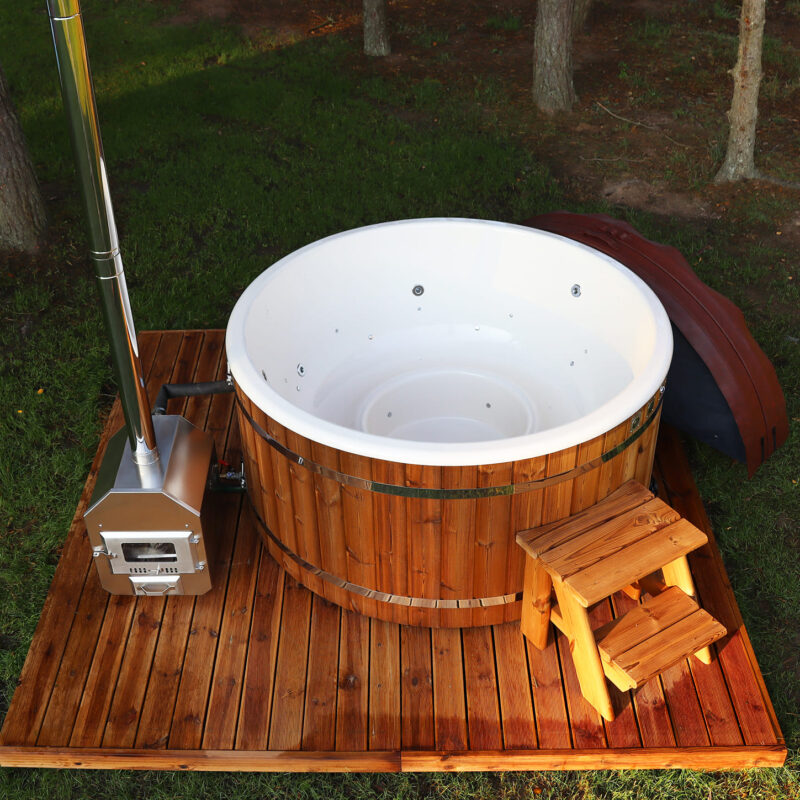
Fiberglass shells trade a little bit of surface refinement for a lower price point and a lighter overall weight (photo: Memelwood)
Acrylic shells are the closest thing to an industry standard for a reason. They’re non-porous, which means they resist staining and bacterial buildup better than almost anything else, they clean easily with basic soap and water, and — assuming a decent resin-to-fiberglass backing — they hold up well to both constant hot water exposure and cold winters. The trade-off is price: acrylic shells cost more to produce than fiberglass alone.
Fiberglass shells sit a step down in price without giving up much in durability. They’re lighter, which simplifies transport and installation, and the molded seating is typically just as ergonomic as acrylic. What you give up is some of the glossy, “hotel-grade” surface finish — fiberglass tends to have a slightly more matte, industrial look unless it’s gel-coated well.
All-wood interiors exist too, mostly in traditional barrel-style tubs, but they’re the highest-maintenance option by a wide margin. Wood needs more frequent cleaning, is harder to sanitize thoroughly, and simply doesn’t last as long under constant water exposure as a properly built acrylic or fiberglass shell. Most manufacturers today solve this by wrapping an acrylic or fiberglass interior in wood cladding on the outside — you get the visual warmth of timber with none of the maintenance downsides on the inside surface.
Heater type and position: integrated, external, or Horizon-style
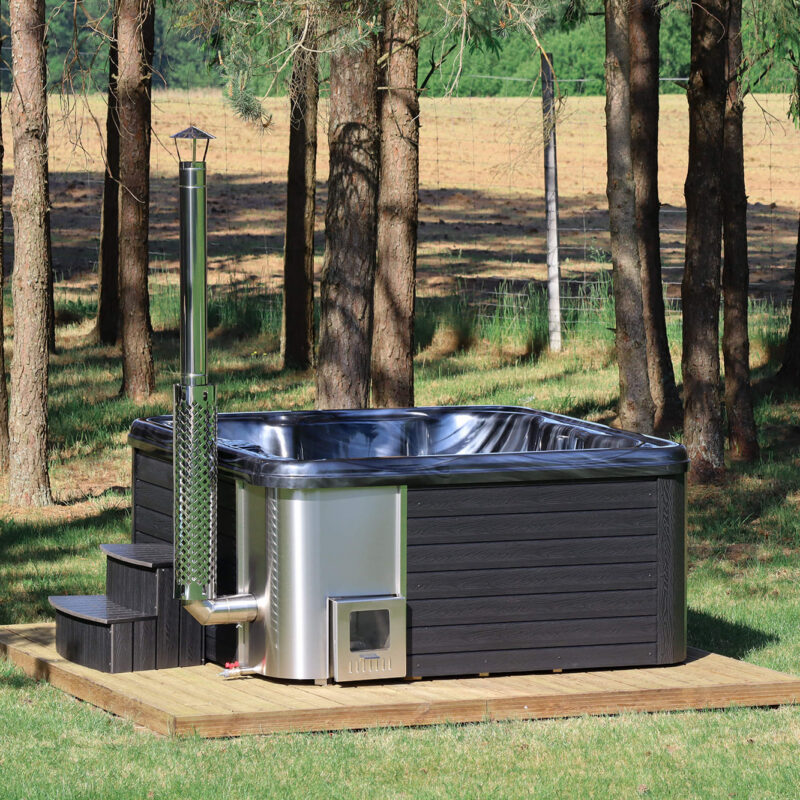
An integrated heater keeps the footprint compact but takes up interior seating space (photo: Memelwood)
This is the decision that affects daily use more than almost any other spec. An integrated heater sits inside the tub structure, which keeps the overall footprint compact and installation straightforward — but it does eat into usable seating space, since part of the interior is taken up by the heating unit itself.
An external heater moves that unit outside the shell entirely, maximizing interior seating for the same overall tub size. It’s the better pick for anyone prioritizing group capacity over compactness, though it does mean the heater needs its own clearance and access for maintenance.
A newer approach — sometimes branded as a “Horizon” style heater — mounts the unit into the side wall behind a glass front. It keeps the interior almost entirely open like an external heater, while still reading as part of the tub’s silhouette rather than a separate accessory bolted on the side. It also tends to look striking after dark, when the glass front glows from the firebox inside. Compare the round Horizon-heater model against a standard integrated-heater version side by side and the seating difference is immediately obvious.
Beyond position, there’s also the wood-fired vs. electric question. Wood-fired heaters give an off-grid, no-electricity option with a live flame and genuine outdoor-bathing character — a real advantage for cabins, countryside properties, or anywhere a power hookup isn’t practical. Electric heaters trade that character for precise, set-and-forget temperature control and no need to store or feed firewood, which matters more in suburban settings where the tub gets used spontaneously rather than as a planned event.
Cladding: thermowood vs. WPC
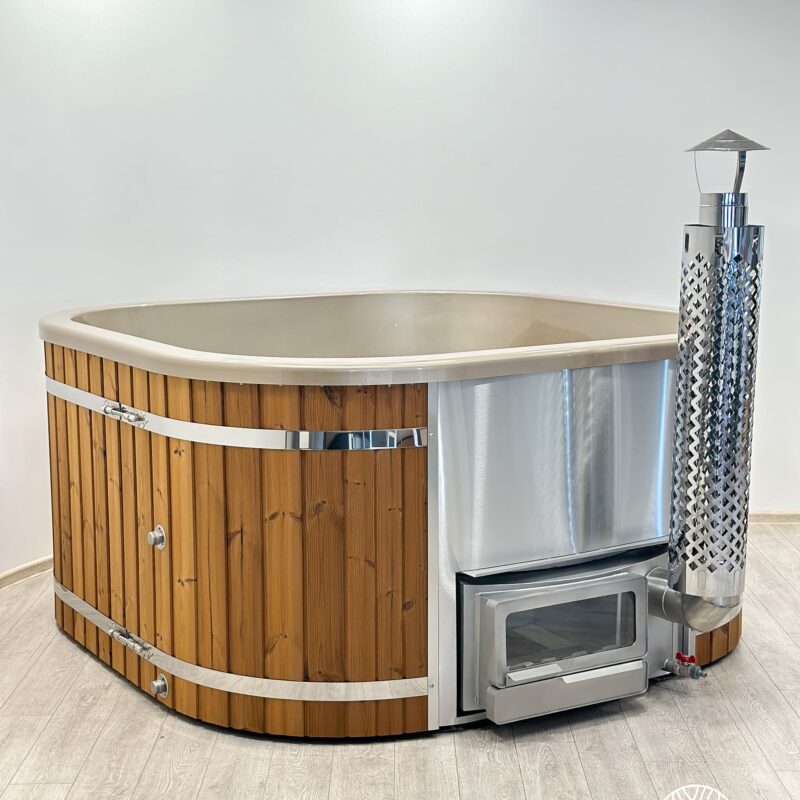
Thermowood cladding ages naturally over time — WPC keeps the same look with essentially no upkeep (photo: Memelwood)
The exterior wrap matters more than most buyers expect. Thermowood — timber heat-treated without chemical additives — has a genuinely warm, natural look and texture that WPC (wood-plastic composite) can’t fully replicate. The trade-off is upkeep: thermowood benefits from occasional oiling to keep its color, and it will still weather and grey somewhat over the years even with care.
WPC cladding is essentially maintenance-free and rot-proof, holding its color and shape regardless of weather. It costs more upfront in most lineups, but for anyone who wants a “set it and forget it” exterior — particularly in rainy climates — it usually pays for itself in avoided maintenance over the tub’s lifetime.
Jets, hydromassage, and how much of that actually matters
Jacuzzi-style tubs with full hydromassage systems are built for genuine hydrotherapy — targeted jets, multiple pressure zones, and layouts designed around specific muscle groups. That’s the right category if the tub’s main job is recovery after exercise or physical therapy-style use.
Simpler tubs with air-nozzle bubble systems, by contrast, are aimed more at relaxation than targeted therapy. They’re usually cheaper to run and maintain, since there are fewer moving mechanical parts that can fail. If the tub is mainly for unwinding with a drink at the end of the day rather than working out sore muscles, a simpler bubble system is often the more sensible — and more reliable — long-term choice.
Insulation and running costs
This is the spec that never shows up in a glossy photo but shows up every month on the electricity or firewood bill. Full-foam insulation around the shell, combined with a properly insulated, tapered lid, is what actually determines how much energy it takes to keep the water hot — especially through a cold winter. A tub with thin or partial insulation might cost noticeably less upfront but end up costing more over a few years of ownership once heating costs are factored in.
It’s worth asking any manufacturer directly for published heating times and, ideally, an estimate of running costs for your climate — vague marketing language (“energy efficient”) without numbers behind it is a reasonable signal to ask more questions.
Size and capacity: bigger isn’t automatically better
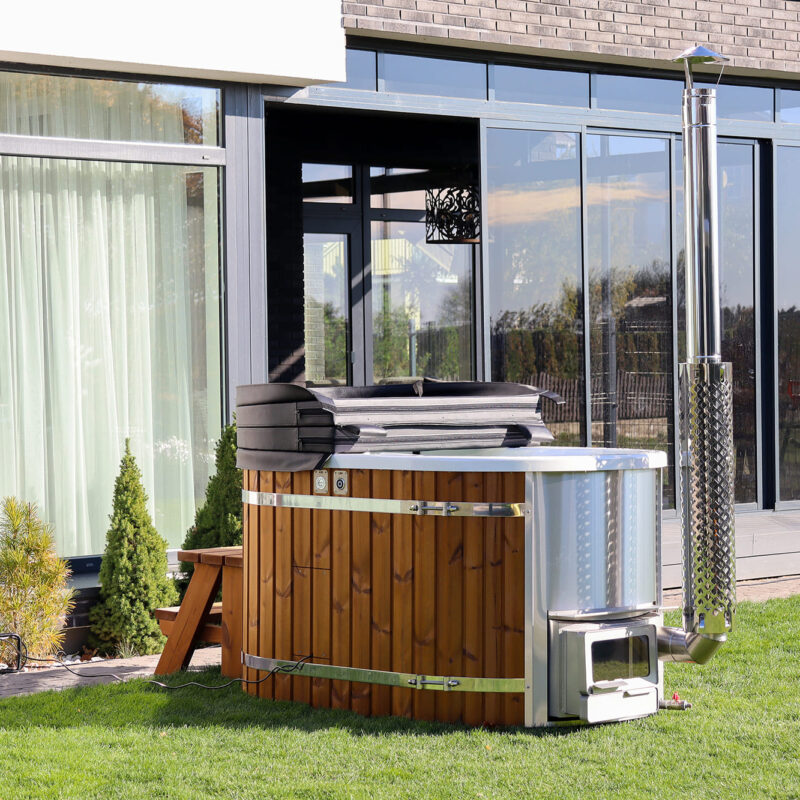
A compact ofuro-style bath heats faster and costs less to run than a large social tub built for a crowd (photo: Memelwood)
A larger tub means more water volume, which directly means longer heat-up times and higher running costs — a real consideration if it’s mostly going to be used by one or two people. Compact ofuro-style baths, designed for couples, exploit exactly this: less water volume means faster heating and lower ongoing costs, which is also why they’re popular in rental and hospitality settings where quick turnaround between guests matters.
On the other end, larger social tubs seating six to eight people make sense for households that regularly entertain, but it’s worth being honest about how often that capacity will actually get used. Paying for — and heating — extra seats that sit empty most of the year is one of the most common regrets among first-time buyers.
Warranty and what it actually signals
A warranty is less about the paper it’s printed on and more about what it tells you regarding the manufacturer’s own confidence. A two-year warranty covering the shell, plumbing, and equipment is generally considered the industry benchmark — anything meaningfully shorter is worth asking about directly. Beyond the warranty period itself, it’s worth confirming whether the company is an actual factory or a reseller, since spare parts availability five or ten years down the line depends heavily on that distinction.
Putting it together: a practical checklist
Before comparing specific models, it helps to have answered these questions for your own situation:
- How many people will realistically use it at once, most of the time — not on the one weekend a year with visitors?
- Does the space call for a round centerpiece, or does a square shape need to integrate into existing decking?
- Is the priority relaxation, or targeted hydrotherapy and recovery?
- Is there reliable electricity access, or would a wood-fired heater actually be more practical?
- How much exterior maintenance are you genuinely willing to do — thermowood upkeep, or a maintenance-free WPC finish?
- What does the manufacturer publish about insulation, heating time, and warranty — and are they willing to put numbers behind it?
Answering those first narrows the field far more effectively than browsing photos ever will.
Frequently asked questions
Is acrylic or fiberglass better for a hot tub shell?
Acrylic generally offers a more refined surface finish, better stain resistance, and easier long-term cleaning, at a higher price. Fiberglass is lighter and more affordable while still holding up well structurally — a solid choice for buyers prioritizing value over surface finish.
Is an integrated or external heater better?
Integrated heaters keep the footprint compact but reduce interior seating. External and Horizon-style heaters maximize seating for the same overall size, at the cost of a slightly larger footprint or a heater that needs its own clearance.
How much bigger should I go than my typical group size?
Most buyers do better sizing close to their actual, regular usage rather than their maximum occasional gathering — a tub sized for eight that mostly hosts two people wastes money on both heating and upfront cost.
Does wood cladding require a lot of maintenance?
Thermowood needs occasional oiling to maintain its color and will still weather naturally over time. WPC cladding is essentially maintenance-free if you’d rather not deal with upkeep at all.
Where to go from here
Once you’ve settled on shape, material, and heater type for your situation, the fastest way to compare real options is against a manufacturer’s full range rather than scattered listings. Memelwood’s complete hot tub catalogue covers round and square shapes, acrylic and fiberglass shells, and integrated, external, and Horizon-style heaters side by side, which makes it easier to compare like-for-like rather than guessing from a single photo. If you have specific requirements, it’s worth requesting a custom quote directly, or reading more about the company’s manufacturing background on their about us page.
This article draws on publicly available information about the hot tub market in 2026. Prices, dimensions and specifications vary by manufacturer, so it’s worth confirming details directly with the seller before buying. Product photos courtesy of Memelwood.