
Ten years ago, if you asked someone in Berlin, Amsterdam, or Vilnius what a “hot tub” looked like, most would picture a wooden barrel with smoke curling out of a chimney pipe. That image hasn’t disappeared, but it’s no longer the whole story. Walk through any garden show in Germany or a wellness expo in the Netherlands today and you’ll notice something: more and more of the tubs on display don’t have a firebox at all. They have a discreet electric heater tucked into the shell, a thermostat, and sometimes a phone app. The European bathtub and outdoor spa market has quietly gone electric, and it’s worth understanding why, because it changes what buyers, dealers, and property developers should actually be looking for.
How big is the European market, really
The honest answer is that Europe isn’t a single market at all — it’s a patchwork of national habits stitched together by EU trade rules. Scandinavia still leans heavily on wood-fired tradition, partly because firewood is cheap and abundant there and partly because the ritual itself is part of the culture. Central Europe — Germany, the Netherlands, Belgium — has moved faster toward electric and hybrid systems, largely because of urban regulation and a customer base that wants convenience over ritual. Southern Europe is a smaller but fast-growing segment, driven more by hospitality and rental properties than private gardens. Collectively, though, European buyers now represent one of the largest and fastest-growing outdoor spa markets in the world, and the supply side — manufacturers, cladding suppliers, heater engineers — has scaled up to match that demand rather than the other way around.
If you want the fuller picture of who actually supplies this market, there’s a longer breakdown in this guide to hot tub suppliers in Europe, and a brand-by-brand comparison in this European hot tub brand comparison.
Why electric heaters specifically are gaining ground
Wood-fired heating has real charm — there’s something genuinely nice about tending a small fire while the water warms up. But charm doesn’t scale well across an entire continent’s worth of regulation, city living, and hospitality operations. A few forces are pushing the market toward electric heaters specifically:
- Urban and rental regulations. A growing number of cities and rental developments across Central Europe restrict or outright ban open flames on balconies, terraces, and shared courtyards. An electric heater sidesteps the issue entirely.
- Guest-ready convenience. In the hospitality sector — hotels, glamping sites, short-stay rentals — nobody wants to explain firewood management to a guest checking in for two nights. Electric units hold a set temperature around the clock, so the tub is simply ready when the guest arrives.
- Lower ongoing labour. No ash to clean, no wood to source and stack, no risk assessment for open flame near guests. For a property manager running several units, that adds up to real staff-hours saved every week.
- Smart integration. Many electric systems now pair with Wi-Fi controllers, so temperature can be checked and adjusted remotely — useful for holiday-let owners who aren’t on-site, and increasingly expected by renters who are used to app-based control of everything else in a property.
Electric heating offers a “set and forget” solution that fits seamlessly into luxury resorts, urban SPA zones, and high-end rental villas — no waiting for wood to burn before a guest can get in.
It’s rarely purely electric, though
What’s interesting is that the market hasn’t fully abandoned wood — it’s blended the two. Hybrid configurations, where a tub can run on either an electric element or a wood-fired burner depending on the situation, have become one of the more requested setups from European buyers in the last two years. It gives a property the best of both: the “authentic outdoor ritual” marketing angle for guests who want it, and the practical, always-ready convenience for everyday use or off-season operation. If you’re specifying a tub for a European market and you’re not sure which way to go, hybrid capability is a reasonable way to avoid picking the wrong side of that debate.
What actually goes into a European-market electric hot tub
| Feature | Why it matters in Europe specifically |
|---|---|
| 3–6kW+ heater with thermostat and flow sensor | Matches typical European household and small-commercial voltage supply without needing special wiring in most installations. |
| Full insulation package | Cuts running costs in colder climates — a meaningful factor across most of Central and Northern Europe for half the year. |
| CE-certified components | Non-negotiable for legal sale and installation anywhere in the EU. |
| Optional solar pairing | Growing interest from eco-conscious buyers in Germany, the Netherlands, and the Nordics wanting a genuinely “green spa” setup. |
| UV-C or sand filtration add-ons | Increasingly requested for commercial/hospitality use, where guest turnover means water hygiene has to be handled automatically rather than manually. |
Seven electric-ready configurations worth knowing
To make this less abstract, here’s a look at the kind of electric-heater-compatible models actually moving through the European market right now.
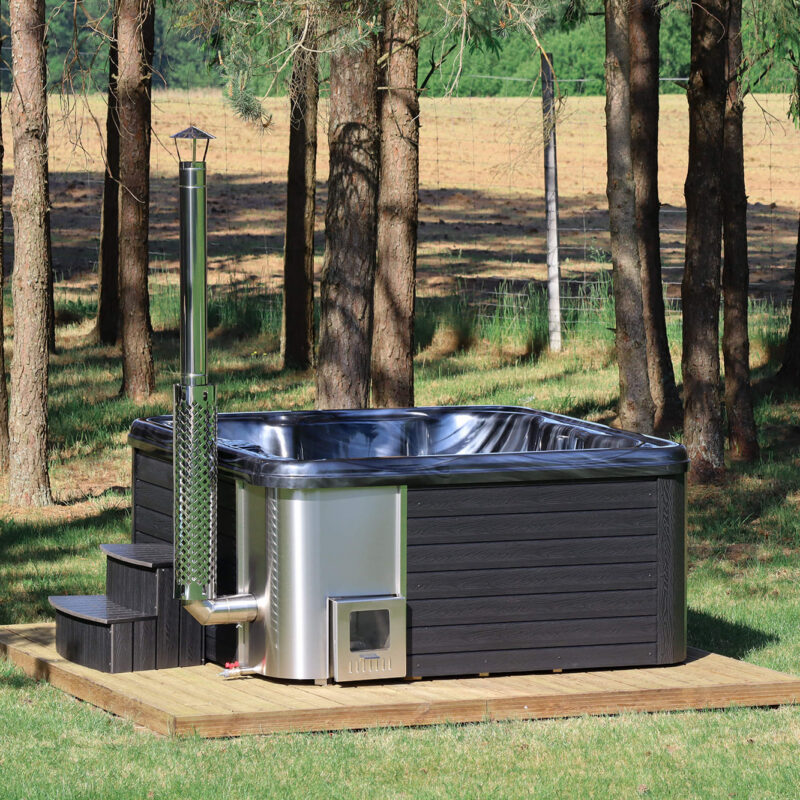
This is the model hospitality buyers across Western Europe tend to reach for first once they want hydromassage on top of heating — the electric option keeps the jets running on demand without any wood management at all.
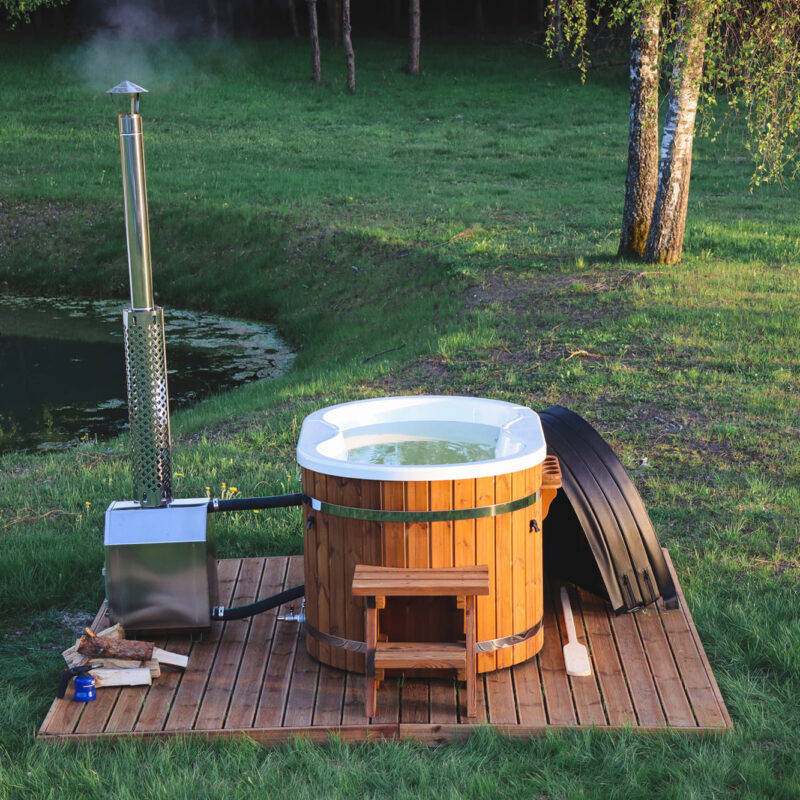
Its small water volume means an electric element heats it noticeably faster than it would a full-size round tub, which is exactly why it’s popular for apartment terraces and boutique city hotels where space and speed both matter.
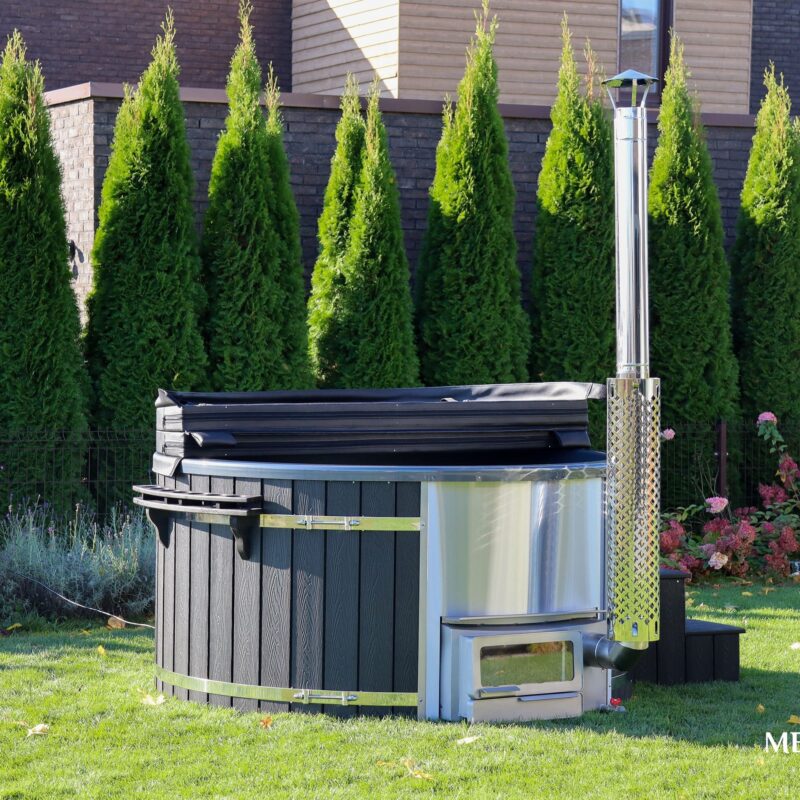
The glass-front Horizon heater has become something of a signature look across design-led European properties — it works equally well as a wood-fired centrepiece or wired for electric operation where local rules require it.
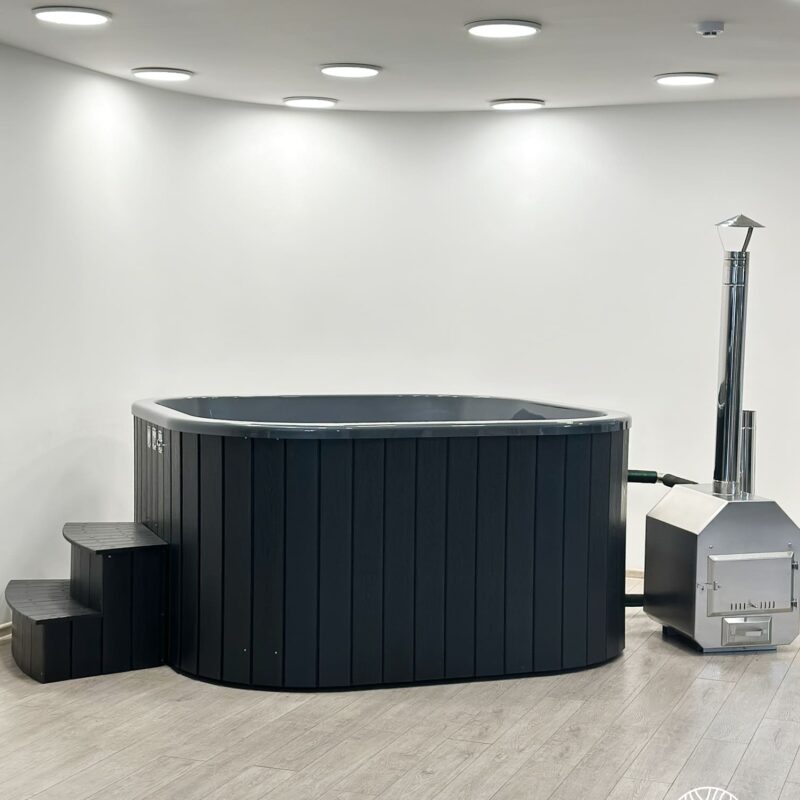
Square shapes have become noticeably more popular across Germany and the Benelux in the last few years, largely because they integrate into contemporary decking far more naturally than a round shell does.
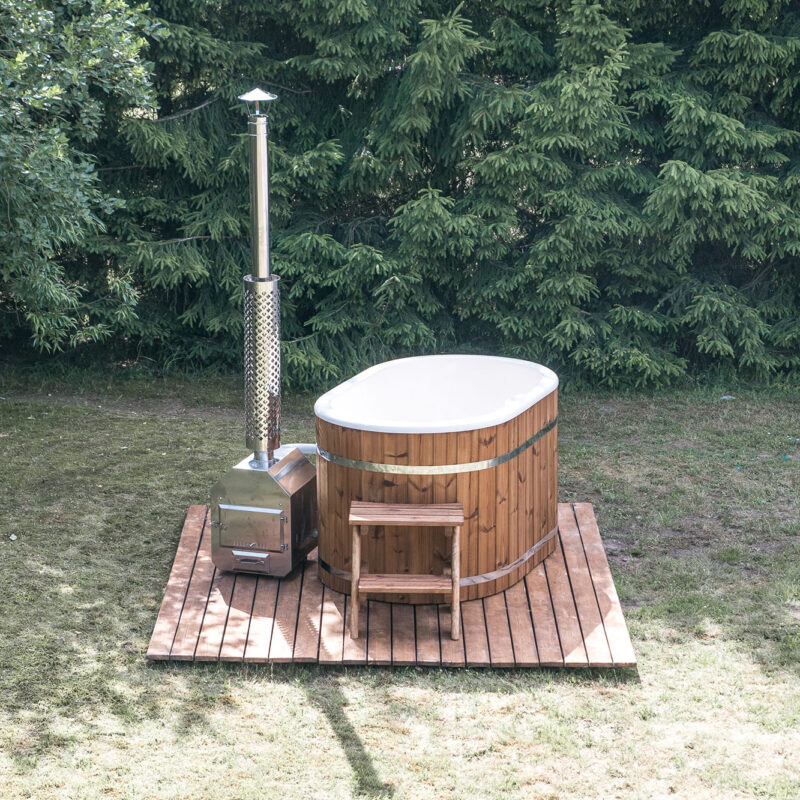
Fiberglass keeps the price down without giving up much durability, which makes it a common pick for mid-market European retailers who need an electric model that’s easy to sell on price as well as convenience.
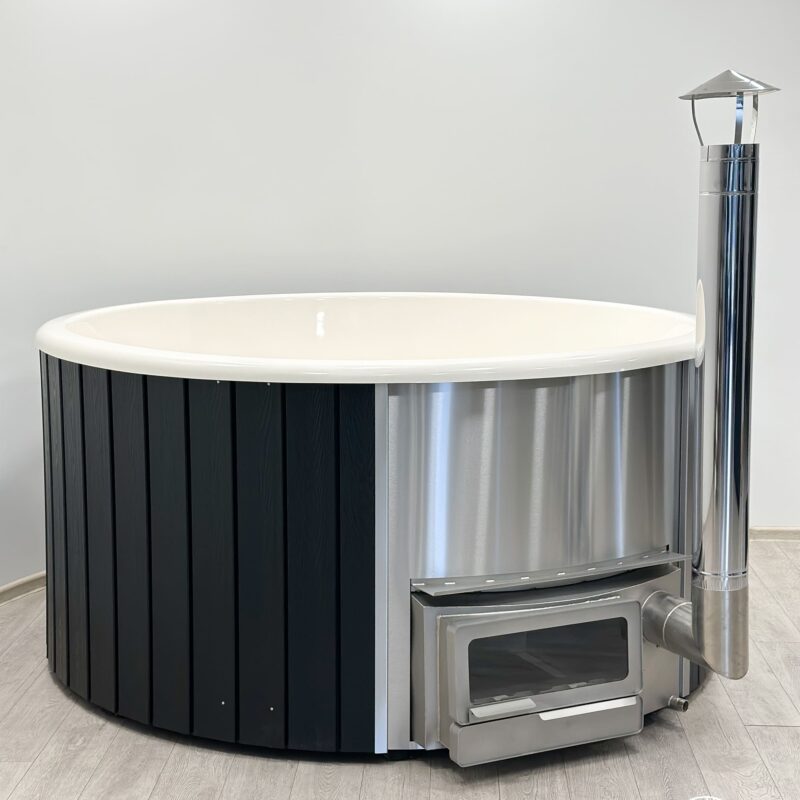
Being noticeably lighter than acrylic, this configuration is easier and cheaper to install on upper-floor terraces and rooftop spaces — a genuinely common request in dense European cities where ground-level gardens are scarce.
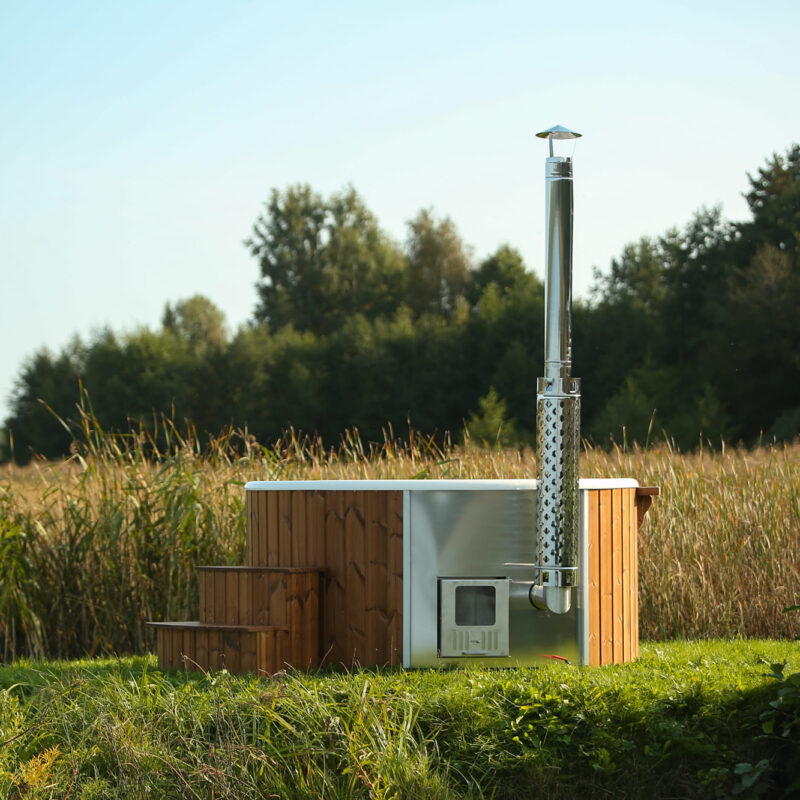
A tidy, self-contained option that keeps the whole footprint small, which tends to matter more in Central European gardens than it does in the more spacious plots further north.
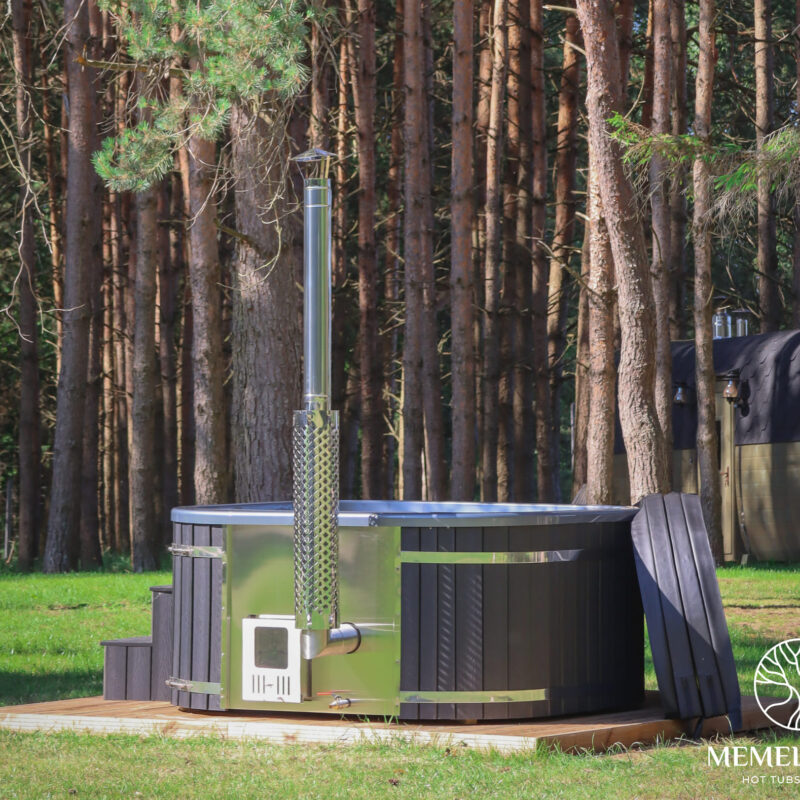
This is the configuration that keeps showing up in hotel spa renders across the continent right now — the sharp lines photograph well, and the integrated electric heater means there’s nothing extra to explain to a design-conscious client.
What to check if you’re specifying for a European property
- Local voltage and wiring requirements. They vary slightly by country, so confirm compatibility before finalising a heater spec, not after installation.
- CE certification, in writing. Ask for documentation, not just a logo on the brochure.
- Running-cost estimates for your specific climate. A heater sized for a mild coastal climate will underperform in a colder inland setting — ask the manufacturer for numbers relevant to your region, not a generic figure.
- Hybrid capability, if you’re unsure. It costs more upfront but removes the risk of picking the wrong heating format for a market that hasn’t fully settled between wood and electric.
Where this leaves buyers in 2026
The European hot tub and bathtub market isn’t abandoning its wood-fired roots — plenty of buyers, especially in Scandinavia, still want the genuine article. But the centre of gravity has shifted. Electric and hybrid heating now dominate new specifications across urban and hospitality-driven markets, and that trend shows no sign of reversing given the regulatory and labour pressures behind it. For anyone buying, specifying, or reselling hot tubs in Europe right now, the practical move is to default to electric-ready or hybrid models unless there’s a specific reason — climate, customer preference, off-grid location — to go purely wood-fired.
Looking to specify or source electric hot tubs for a European project? Browse the full range on the Memelwood electric hot tubs page, or go straight to request a quote.
Related reading: Hot Tub Suppliers in Europe · European Hot Tub Brands Compared · Full Hot Tub Range