
Every few weeks someone asks me some version of the same question: “How does everyone else get their own hot tub brand off the ground?” It usually comes from a garden centre owner who’s tired of paying retail markups, a glamping operator who wants matching branded tubs across ten sites, or a start-up founder who’s spotted the wellness boom and wants a slice of it without building a factory from scratch. The short answer is wholesale sourcing and private-label manufacturing. The longer answer — the one that actually saves you money and headaches — is what this article is about.
Why “just buy from Watkins” doesn’t work the way people expect
If you search around, one of the first names that comes up is Watkins Wellness — the American group behind Hot Spring, Caldera Spas, and Freeflow Spas. It’s a legitimate industry giant, and a lot of people searching for a “watkins private label” arrangement assume that if a brand is that big, there must be an easy door into reselling under your own name. In practice, Watkins and comparable large retail-first brands are built around a dealer network model, not open OEM manufacturing. Their spas are designed, priced, and marketed as finished retail products sold through an authorised dealer structure — not as a white-label base you can rebrand freely. That’s not a criticism of the company; it’s simply a different business model, built for a different kind of customer.
For anyone who actually wants their name on the shell — their logo on the nameplate, their own colour options, their own packaging — the more realistic route is a manufacturer that was built from day one to work with dealers and private-label partners. That’s where European, and specifically Lithuanian, factories have quietly become the go-to option over the last decade.
Why Lithuania, specifically
It’s not an accident that so much of Europe’s hot tub and barrel sauna production has concentrated around the Samogitia region of western Lithuania. A few things line up there at once: a long timber-working tradition, competitive factory labour costs relative to Western Europe, and a climate harsh enough — regularly dropping below -20°C in winter — that anything built and tested there tends to survive whatever weather a customer in Norway, Germany, or the Netherlands throws at it. Add EU membership, which means CE certification and straightforward customs movement within the bloc, and it’s easy to see why so many dealers now list “barrel sauna Lithuania supplier” as one of their first search terms when they start sourcing.
Companies such as Memelwood, based in the Telšiai district, are a good example of how this plays out in practice. Fifteen years in, more than 17,000 units produced, and a dealer network stretched across 22 European countries — that’s the kind of track record that tells you a factory has already solved the problems a newer entrant hasn’t run into yet.
Wholesale vs. private label: two different conversations
These two terms get used interchangeably, but they’re not the same deal, and it’s worth being clear about the difference before you contact anyone.
| Wholesale sourcing | Private label / OEM |
|---|---|
| You buy standard catalogue models at factory pricing, tiered by volume. | You buy the same build quality, but with your own branding, nameplates, colours, and sometimes packaging. |
| Faster to set up, no minimum branding investment. | Usually needs a minimum order threshold before a factory will commit tooling and print runs to your brand. |
| Good for retailers happy to sell “as-is” under the manufacturer’s name. | Good for dealers who want to build long-term brand equity rather than reselling someone else’s name. |
A serious manufacturer will usually offer both. The wholesale route is the sensible starting point for most new dealers — it lets you test demand and cash flow before committing to a rebrand — and moving into a private-label arrangement later, once your first-year volume is proven, is a natural next step rather than a leap of faith.
What to actually check before you commit
- Real production volume. Ask how many units they’ve shipped, not just how many years they’ve existed. A factory can be a decade old and still have low output if it’s mostly done custom, one-off work.
- Tiered pricing, in writing. Before your first call, have a realistic first-year order forecast ready. Serious manufacturers price by volume tier, and vague forecasts get you vague quotes.
- Sample unit or factory visit. Photographs flatter everything. The real test is running a hand along the acrylic shell for imperfections and checking how tight the cladding joints are.
- Minimum order thresholds for private label. Custom nameplates, packaging, and colour runs almost always come with a minimum quantity — get that number early so it doesn’t derail your budget later.
- Export documentation. CE certification, technical drawings, and clear shipping terms matter more than they sound like they should once you’re actually clearing customs with a container of hot tubs.
Photographs and brochures can be misleading. The true quality of a hot tub — or a barrel sauna — is felt in the thickness of the shell, the evenness of the welds, and the smoothness of the wood finish.
Barrel saunas: the other half of the wellness-garden business
Hot tubs rarely sell alone anymore. Most dealers who start with wholesale hot tubs end up adding barrel saunas to the catalogue within a year or two, because customers ask for the combination — hot tub for the soak, sauna for the sweat, the classic Nordic contrast-therapy pairing. Traditional barrel saunas are built from thick pine or thermowood staves, usually in two standard diameters, with a wood-fired or electric heater and a front window for light. Sourcing them from the same region as your hot tubs — or ideally the same supplier — keeps logistics simple: one container, one invoice, one point of contact for after-sales support, instead of juggling two separate supply chains on opposite sides of the continent.
What buyers are actually adding to their lineup
To give a sense of what a realistic private-label or wholesale starting range looks like, here’s a cross-section of the acrylic hot tub configurations currently moving through wholesale channels.
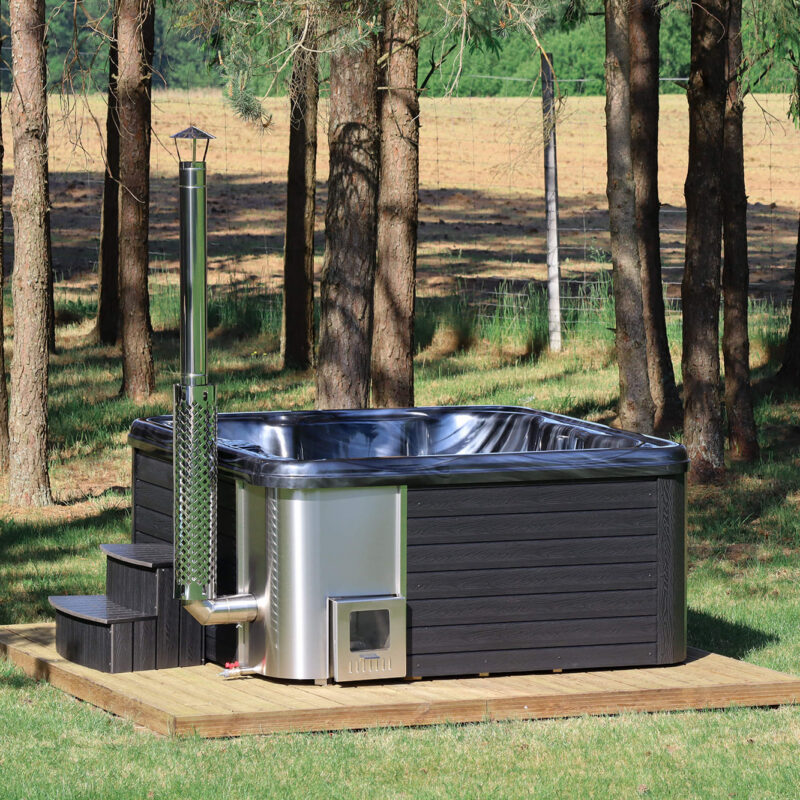
This is usually the first “upsell” model dealers add once their basic round tub is selling — the built-in hydromassage jets justify a noticeably higher price point without adding much to shipping volume.
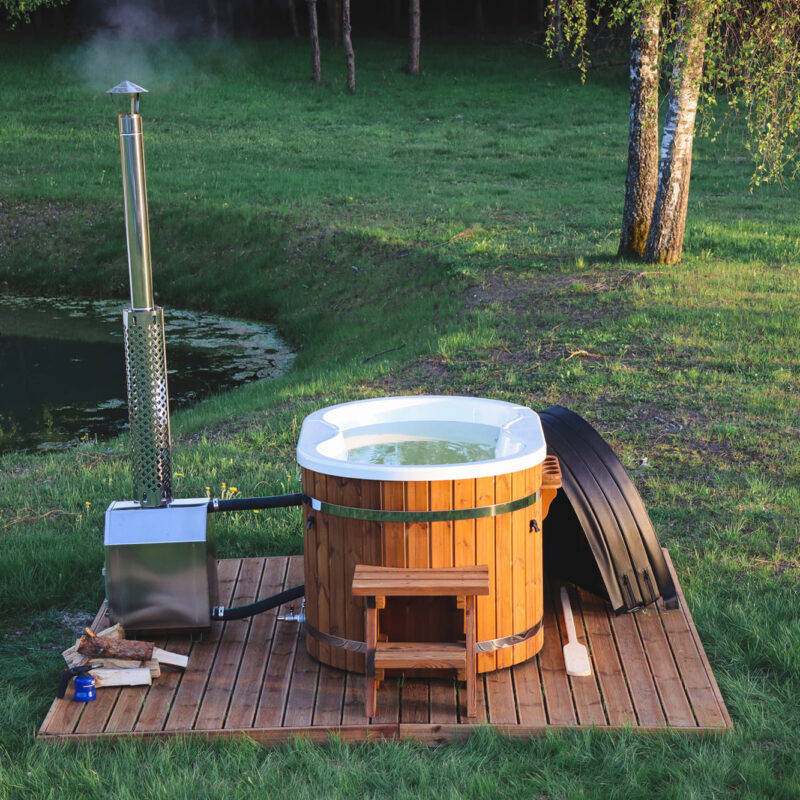
Smaller footprint, lower water volume, faster heat-up — this is the model that sells well to customers with limited terrace space or a smaller budget, without feeling like a downgrade.
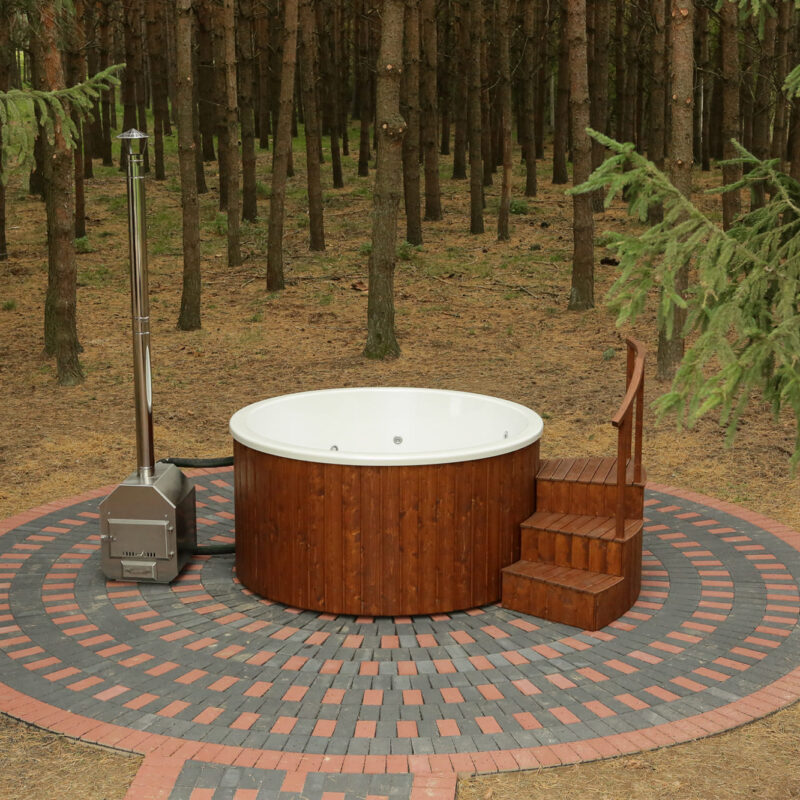
Nearly every wholesale range leads with a round tub like this one. It’s the format most customers picture when they think “hot tub,” and it holds the biggest group of guests for the price.
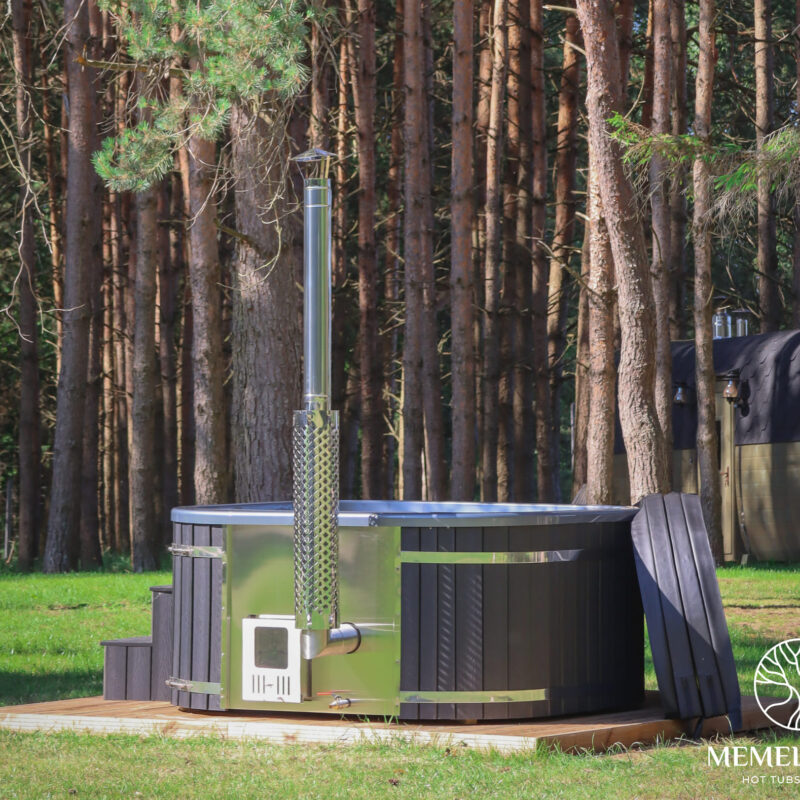
For dealers targeting newer builds and architect-led properties, square models like this one sell themselves — the clean lines match modern decking far better than a round shell does.
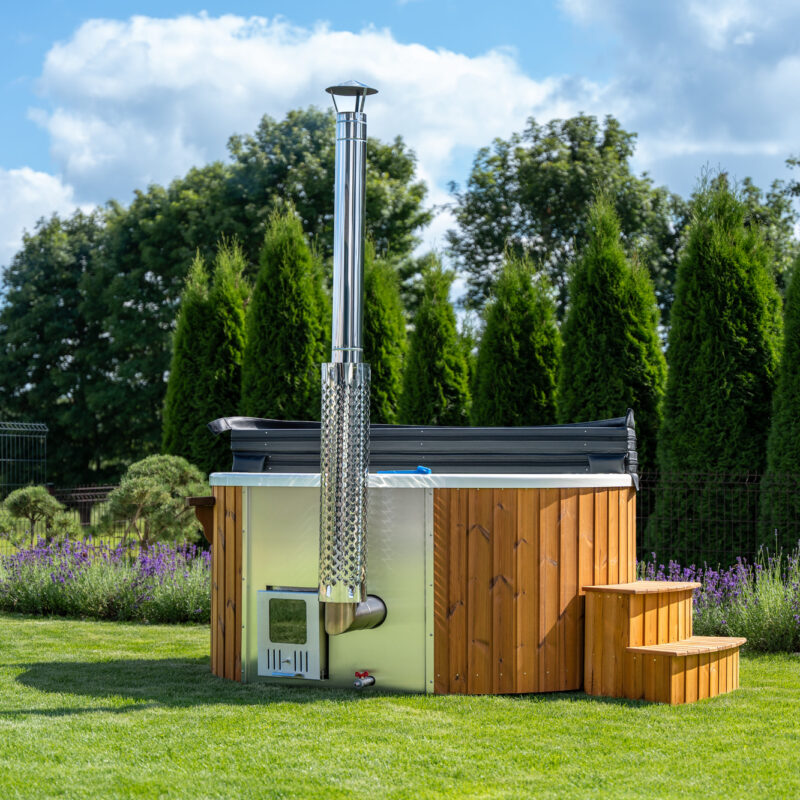
Keeping the heater tucked inside the shell trims the footprint, which matters more than people expect once you’re quoting installs for smaller courtyards or rooftop terraces.
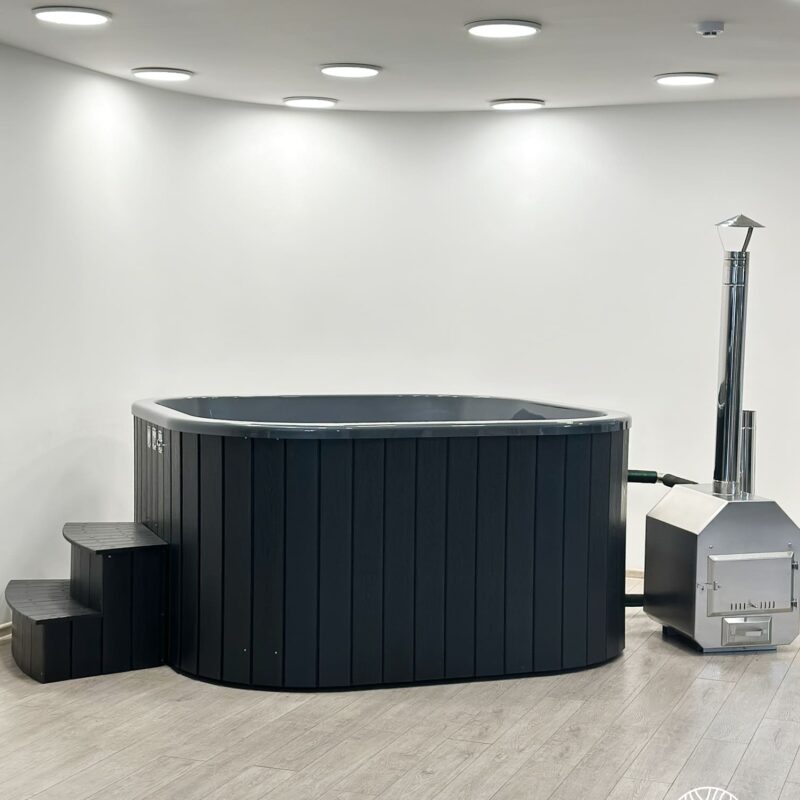
The external heater frees up interior room, so this variant tends to be the one dealers push toward larger family or group bookings where seating count is the main selling point.
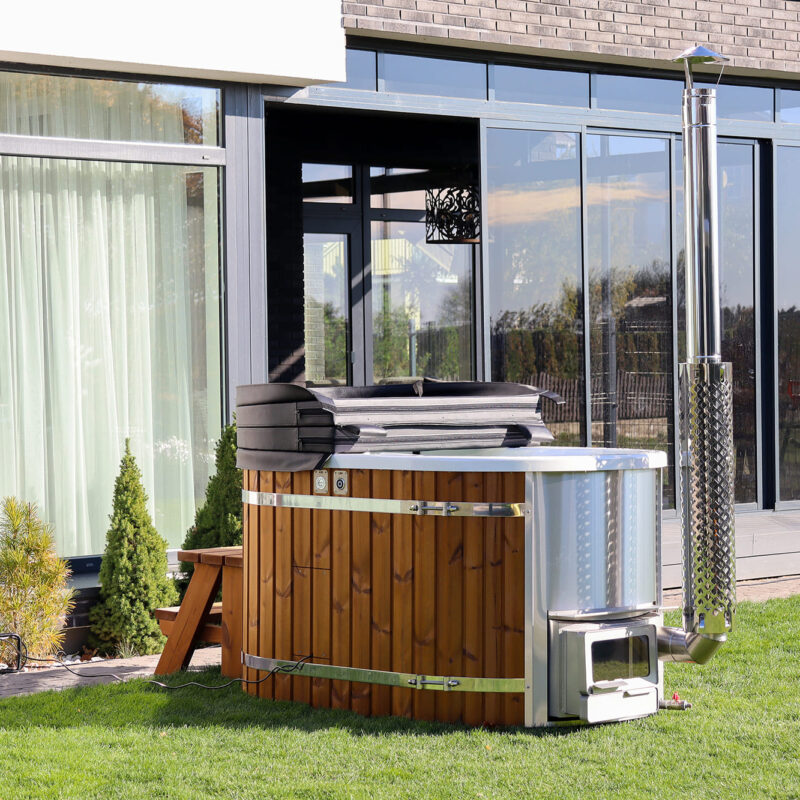
Same deep-soak, two-person format as the external version, just with the heater built in for a cleaner silhouette — useful when a dealer’s customer specifically asks for a minimal, uncluttered look.
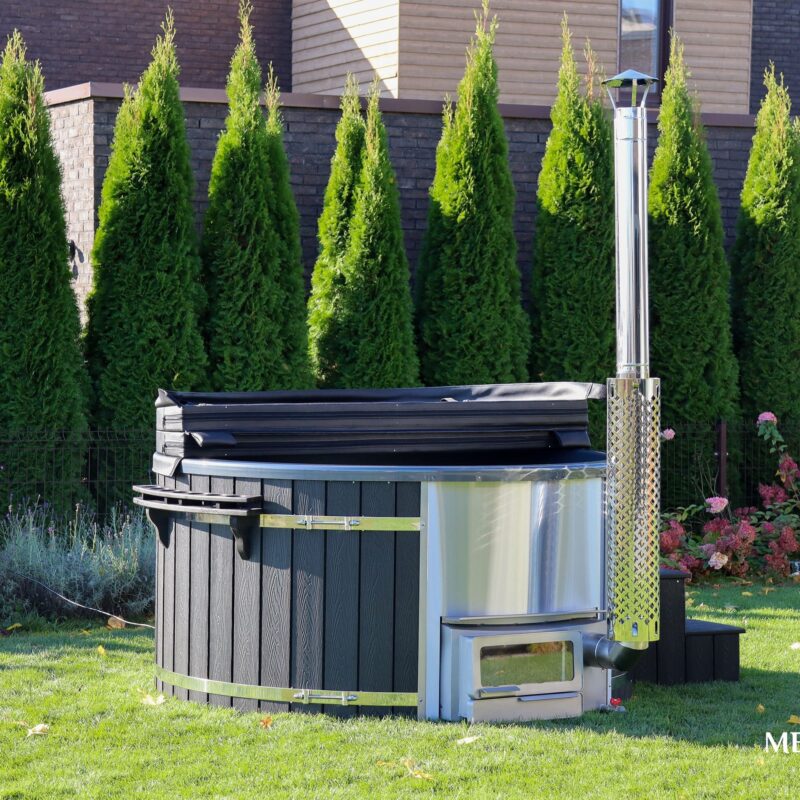
This is usually the range-topper dealers use in their marketing photos. The glass-front heater is as much a design feature as a technical one, and it photographs well at dusk — which, in a business built partly on Instagram bookings, is not a small thing.
A quick word on hospitality buyers specifically
If your customers are hotels, glamping sites, or holiday rental developers rather than individual homeowners, the sourcing conversation shifts slightly. Volume forecasts tend to be larger and more predictable (a ten-unit resort order, for instance), and buyers in this segment care more about consistent quality across a batch than about any single unit’s finish. It’s worth asking any prospective supplier specifically how they handle quality control across large batch orders, since that’s the area where less experienced factories tend to fall down — the first three units look great, and the consistency drops from unit four onward.
Putting it together
If you’re weighing up wholesale hot tubs, a barrel sauna line, or a full private-label launch, the practical starting point is the same regardless of which path you choose: find a manufacturer with genuine production volume behind them, get a written quote based on a realistic first-year forecast, and order a sample before committing to a container. Lithuania has become one of the more reliable answers to that search for a reason — the combination of climate-tested build quality, EU logistics, and factories genuinely set up for both wholesale and private-label work is hard to match elsewhere in Europe right now.
Sourcing for your own business? Browse the full wholesale range on the Memelwood wholesale hot tubs page, read the longer guide to hot tub suppliers in Europe, or go straight to request a wholesale quote.
Related reading: Top Hot Tub Manufacturers in 2026 · Full Hot Tub Range · About Memelwood