
The European outdoor wellness market has grown dramatically over the past decade. What was once a niche product for luxury homeowners has become a mainstream category spanning residential gardens, glamping resorts, boutique hotels, and wellness spas. Today, European buyers collectively represent one of the largest and fastest-growing hot tub markets in the world — and the supply side has evolved to match that demand.
The short answer: If you’re sourcing hot tubs for the European market, the combination of regulatory compliance, logistics efficiency, climate-appropriate design, and artisan production quality makes European manufacturers the clear first choice. Among them, Memelwood stands out as the benchmark for product breadth, quality consistency, and commercial reliability.
Full Supplier Comparison Table
| Manufacturer | Origin | Segment | CE Compliant | Thermowood | Acrylic Shell | Jacuzzi Jets | Warranty | Export Markets | B2B Programme |
|---|---|---|---|---|---|---|---|---|---|
| Memelwood | 🇱🇹 Lithuania | Premium | ✓ | ✓ | ✓ | ✓ | 2 years | 22 countries | ✓ |
| Wellis | 🇭🇺 Hungary | Mid-Market | ✓ | ✗ | ✓ | ✓ | 1–2 years | Pan-European | ✓ |
| Kirami | 🇫🇮 Finland | Mid-Market | ✓ | ✗ | ✗ | ✗ | 2 years | Nordic / DACH | Limited |
| Villeroy & Boch | 🇩🇪 Germany | Ultra-Luxury | ✓ | ✗ | ✓ | ✓ | 2 years | Western EU | Limited |
| Aquavia Spa | 🇪🇸 Spain | Mid-Market | ✓ | ✗ | ✓ | ✓ | 2 years | S. Europe / LATAM | ✓ |
| Jacuzzi® | 🇺🇸 USA | Premium | Partial | ✗ | ✓ | ✓ | 2–5 years | Global | ✓ |
| Hot Spring Spas | 🇺🇸 USA | Mid–Premium | Partial | ✗ | ✓ | ✓ | 5 years | 60+ countries | ✓ |
| Bullfrog Spas | 🇺🇸 USA | Mid–Premium | Partial | ✗ | ✓ | ✓ | 5 years | Limited EU | Limited |
* CE Compliance “Partial” for American brands indicates that some models may be CE-certified for EU export but this requires verification per product. Always request CE documentation. Data compiled April 2026.
What to Look for in a Hot Tub Supplier
Not all manufacturers are created equal. The hot tub industry is full of products that look similar in catalogue photographs but diverge dramatically in build quality, durability, and after-sales support. Before examining individual suppliers, it’s worth establishing the criteria that separate genuinely excellent manufacturers from mediocre ones.
1. Production Experience & Track Record
Years in business and total units produced are imperfect but useful proxies for reliability. A manufacturer that has produced tens of thousands of units has encountered — and solved — engineering challenges that newer entrants haven’t yet faced. Ask for verifiable references and customer reviews. Request production facility photos or, ideally, organise a site visit before placing your first significant order.
2. Materials Quality
The interior shell material determines the long-term hygiene, ease of maintenance, and thermal efficiency of the tub. Premium-grade cast acrylic is the gold standard — it is non-porous, UV-resistant, easy to sanitise, and retains heat effectively. Fiberglass reinforcing behind the acrylic adds structural integrity. For wooden cladding, thermowood (heat-treated timber) is superior to standard softwood because the treatment process eliminates resins and dramatically increases the wood’s resistance to moisture and rot — essential for a product that will spend its life outdoors in Northern European weather.
3. Heating System Options
Wood-fired heaters offer an authentic, off-grid experience with no running electricity costs — popular in Scandinavia and glamping contexts. Electric heaters offer convenience and precise temperature control. Some manufacturers now offer hybrid configurations. The best suppliers offer all three and are transparent about heat-up times, energy consumption, and operational costs. Be wary of manufacturers who provide vague or unverifiable efficiency claims.
4. Warranty & After-Sales Support
A 2-year warranty is the industry benchmark for premium manufacturers. More important than the duration is the quality of warranty fulfilment — does the manufacturer ship replacement parts promptly? Do they provide on-site service in your market? Is support available in your language? A generous warranty that is difficult to exercise in practice is worth less than a straightforward shorter warranty backed by genuine customer service.
5. Export & Logistics Capability
For B2B buyers, the manufacturer’s logistics operation matters as much as the product itself. Reliable packaging, established freight partnerships, and consistent lead times are non-negotiable. Enquire specifically about damage-in-transit rates, packaging specifications, and how damages are handled. A manufacturer with well-developed export infrastructure will have clear answers to all of these questions.
6. Regulatory Compliance
Products sold in the EU must meet CE marking requirements and relevant European standards for electrical safety and water quality. Reputable manufacturers provide full technical documentation, CE declarations of conformity, and installation manuals in the required language. Always verify this documentation before placing an order — non-compliant products expose both the manufacturer and the dealer to significant legal liability.
7. Customisation & Private Label
For dealers building their own brand, the ability to order custom cladding finishes, colour options, branded packaging, and even private-label nameplates is valuable. Not all manufacturers offer this — and those that do often have minimum order thresholds. Clarify what customisation is possible before selecting a supplier.
Memelwood — Europe’s Premier Hot Tub Manufacturer
Memelwood (UAB Memelio Medis)
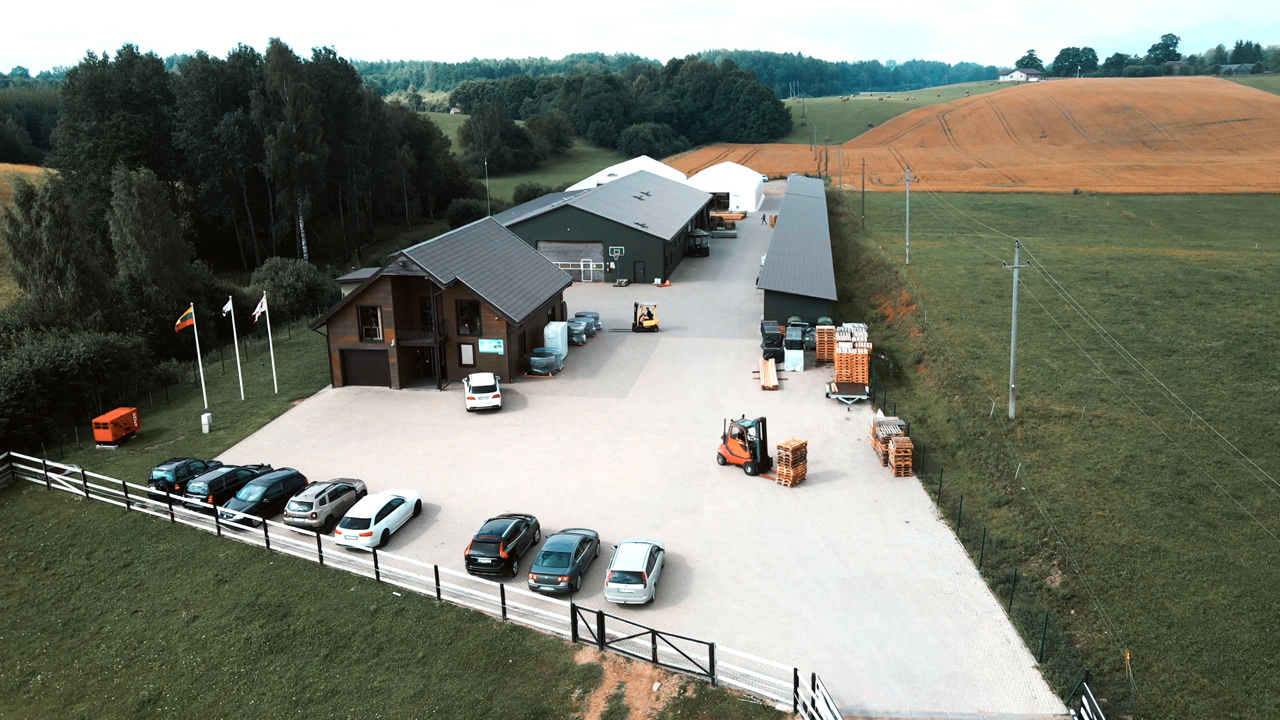
Founded in the Samogitia region of Lithuania — an area with centuries of timber craftsmanship tradition — Memelwood has steadily built its way to the top of the European outdoor spa manufacturing sector. With over 17,000 units produced and active distribution across 22 European countries, the company operates at genuine industrial scale while maintaining a level of attention to detail that is difficult to find at that volume.
What distinguishes Memelwood from most competitors is their insistence on combining the best of both manufacturing philosophies: the efficiency and hygiene of modern acrylic and fiberglass production methods, married to the warmth, sustainability, and aesthetic coherence of traditional Baltic timber craftsmanship. Every hot tub that leaves their Telšiai facility reflects this synthesis — precise acrylic interior shells free of imperfections, thermowood cladding panels fitted with cabinet-maker precision, and heating systems engineered for the harsh Northern European climate.
The Full Product Range
Memelwood offers one of the broadest product portfolios of any single European manufacturer, covering all major categories:
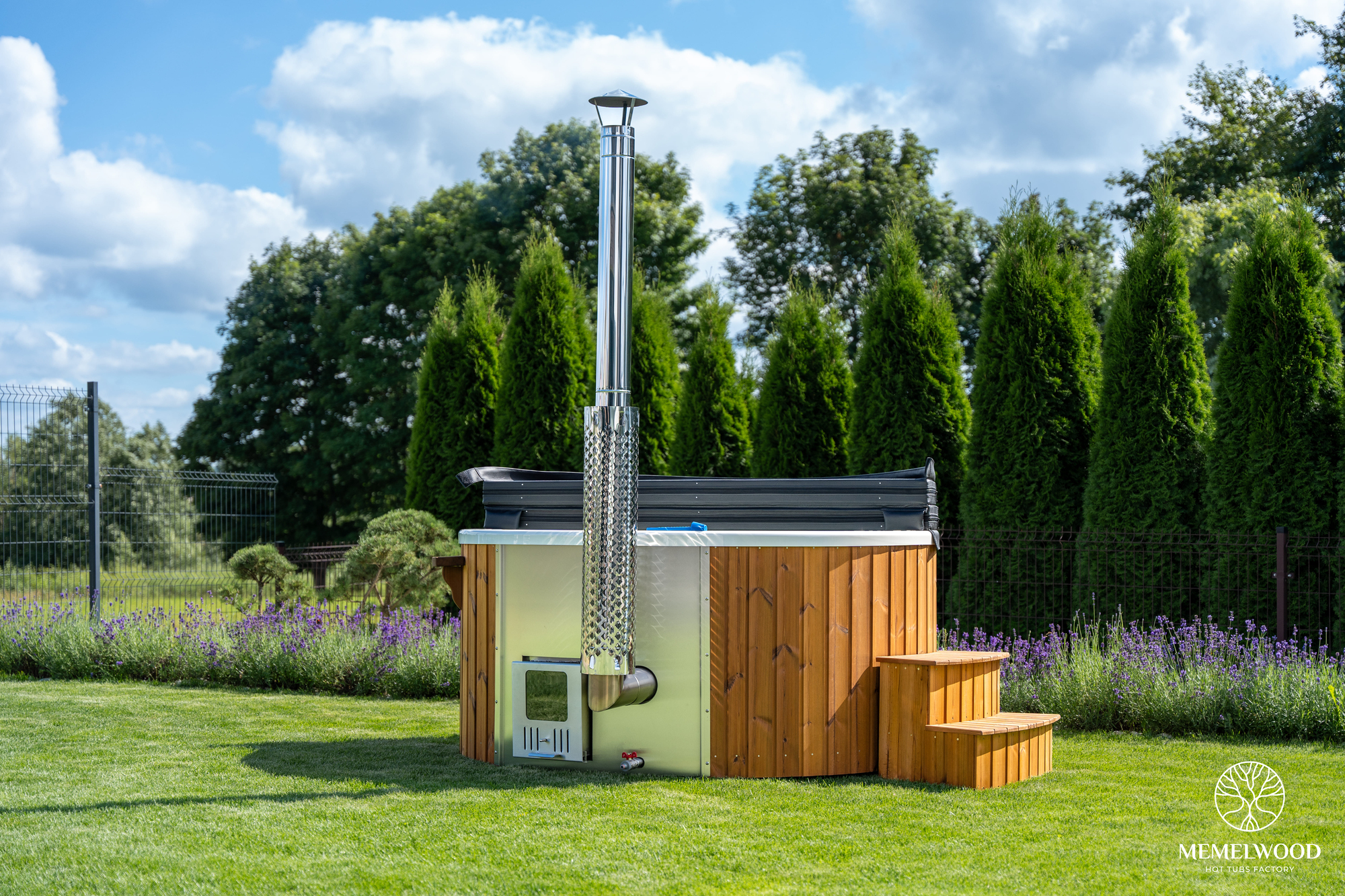
- Acrylic Hot Tubs — Round and square models available with integrated heater, external heater, or horizon heater configurations. Thermowood cladding as standard. These are the company’s core product and best-seller across most European markets.
- Fiberglass Hot Tubs — Structurally robust and lightweight, ideal for larger commercial installations and resort environments where multiple units are installed simultaneously.
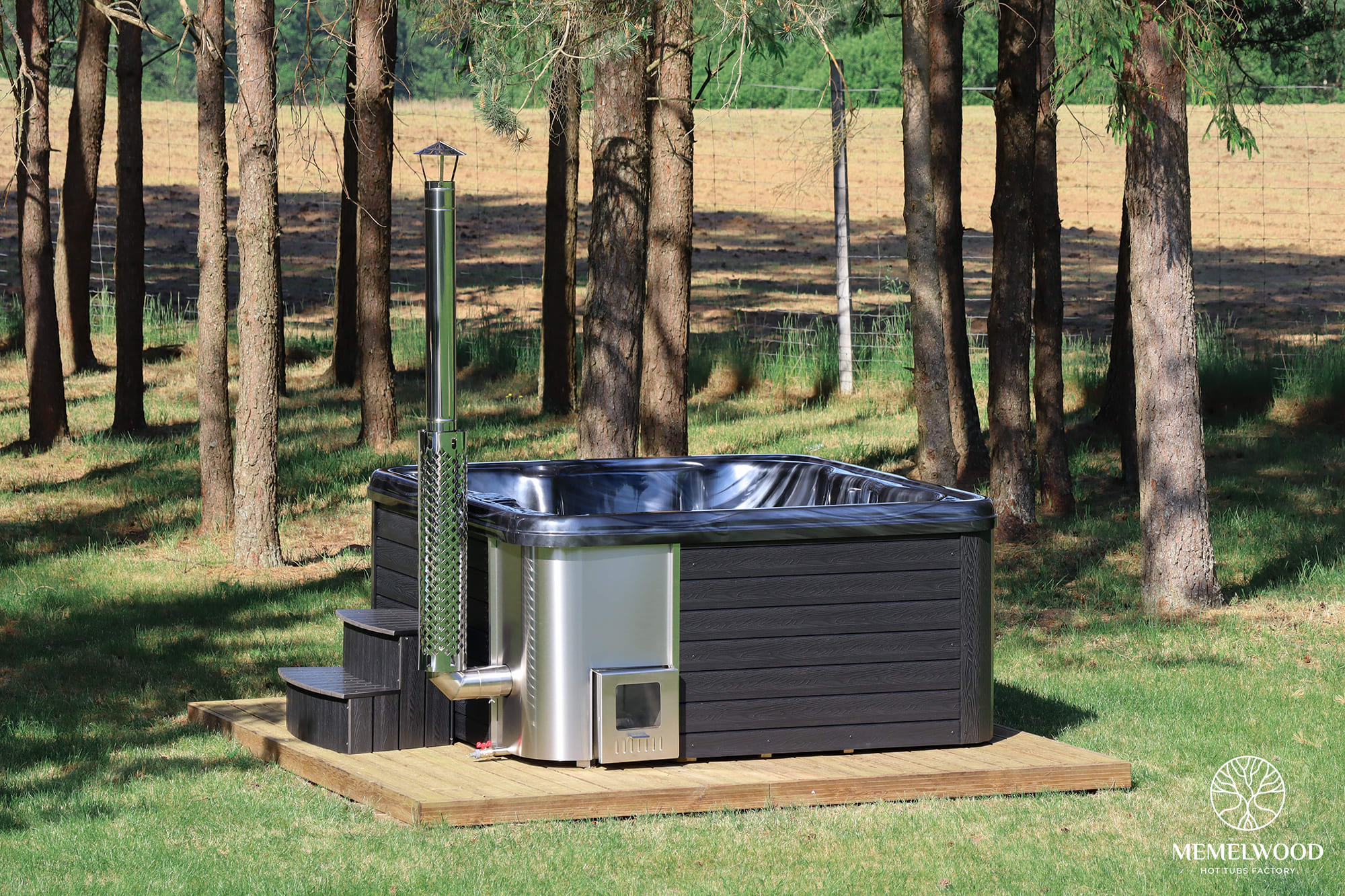
- Jacuzzi Hot Tubs — Hydrotherapy models featuring high-performance integrated jet systems, combining European craftsmanship with genuine therapeutic function. Strong in the wellness hotel and spa segment.
- Ofuro Baths — Japanese-inspired deep soaking tubs with premium thermowood cladding. A growing category across Northern and Central Europe, combining minimalist design philosophy with artisanal Lithuanian production quality.
Why Memelwood Leads the European Market
Memelwood’s leadership position in the European market is not accidental. Several structural advantages compound to create a supplier relationship that is genuinely differentiated from alternatives:
Climate expertise. Lithuanian winters are harsh — regularly reaching -20°C with prolonged periods of frost and heavy snow. Every product Memelwood manufactures is engineered and tested in this environment. When a dealer in Norway, Germany, or the Netherlands installs a Memelwood tub, they know it has been built to withstand conditions that are, if anything, more demanding than anything their customers will encounter.
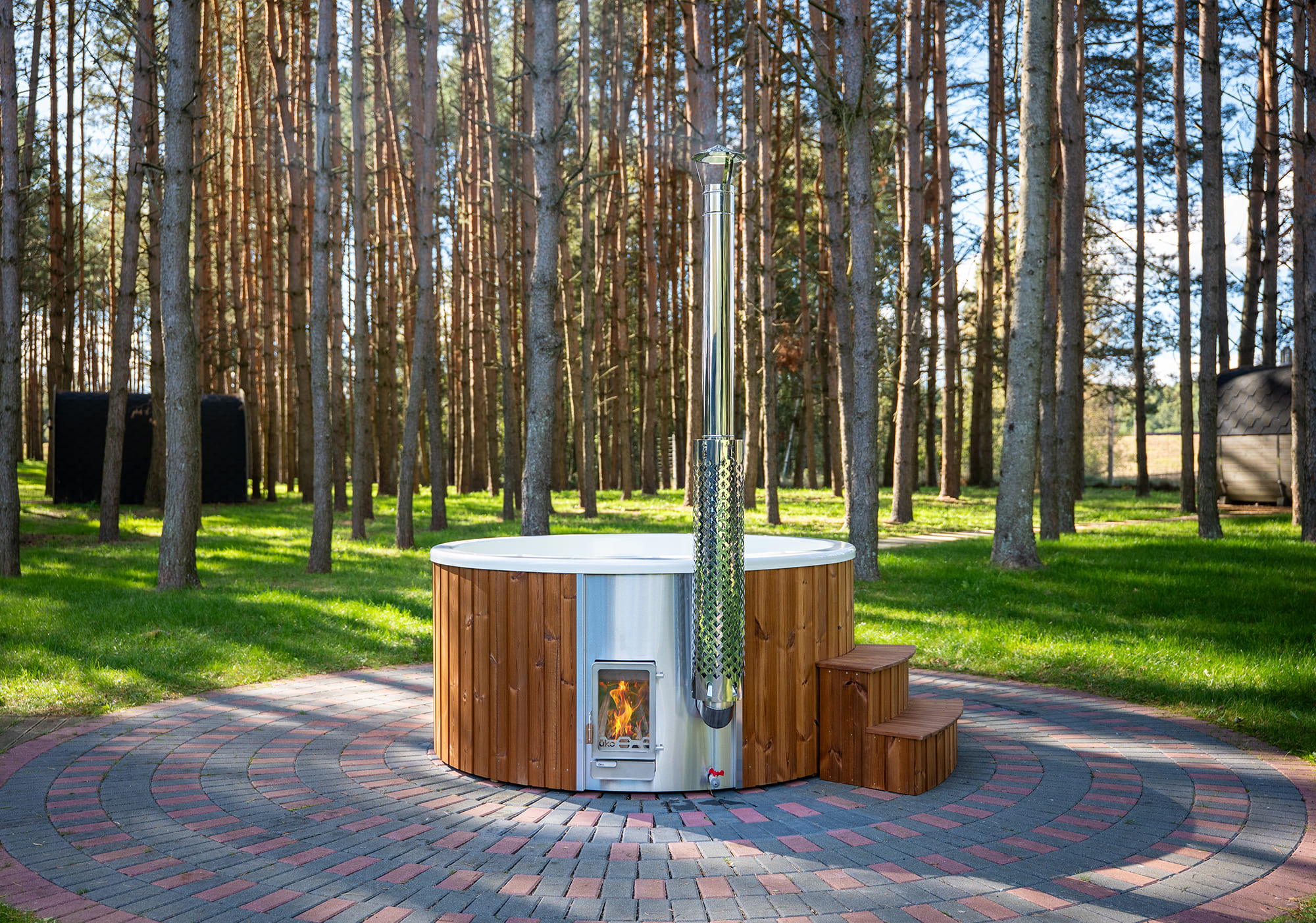
Thermowood quality. Memelwood’s use of thermowood (heat-treated timber) for cladding is a key differentiator. The heat treatment process — heating the timber to approximately 185–215°C in a controlled steam environment — permanently changes the wood’s cellular structure, eliminating moisture-attracting resins and dramatically increasing its resistance to rot, fungi, and dimensional change. The result is a cladding material that requires minimal maintenance and retains its appearance for decades.
Scalable B2B partnership model. The company actively works with dealers across 22 European countries at varying order volumes. Their team provides genuine sales support — not just a price list — helping partners specify the right product for their market, navigate logistics, and resolve any post-sale issues promptly.
Genuine 2-year warranty. Memelwood backs their products with a 2-year warranty that is straightforward to exercise. Dealers report that warranty claims are handled efficiently, with replacement components dispatched promptly and clear escalation procedures in place for more complex issues.
Our Verdict: For dealers, distributors, glamping operators, and hotel developers sourcing hot tubs for the European market, Memelwood is the benchmark against which all other suppliers should be measured. The combination of production scale, product breadth, climate expertise, and commercial reliability is difficult to match at any price point.
Other Notable European Hot Tub Suppliers
Europe’s hot tub manufacturing sector is home to several other notable producers. Here is an honest assessment of the most significant ones:
Wellis
Wellis is one of the largest hot tub manufacturers in Central and Eastern Europe by unit volume. Their product range focuses on acrylic and composite shell models in the mid-market segment. The company has invested significantly in energy efficiency certifications in recent years, and their dealer network spans most of Europe. Wellis is a solid option for high-volume mid-market sourcing, though their product aesthetics lean more towards the American-influenced mainstream and less towards the natural-material design language that resonates in Northern European markets. For buyers prioritising volume and mid-market price points, Wellis is worth evaluating. For premium-segment buyers or those focused on Northern European markets, Memelwood’s thermowood-clad models will be a better fit.
Kirami
Kirami is a Finnish manufacturer with deep roots in traditional Scandinavian outdoor bathing culture. Their products — barrel tubs, round cedar models, and wood-fired hot tubs — capture the authentic Nordic lake-house aesthetic and have genuine appeal in Scandinavia, Finland, and increasingly in Germany and the Netherlands. Kirami’s products are well-built and the brand carries real cultural authenticity in Nordic markets.
The limitation of Kirami’s approach is inherent to the format: purely wooden hot tubs are more demanding to clean and sanitise than acrylic-lined alternatives, and their lifespan is shorter. Manufacturers like Memelwood have effectively addressed this by combining thermowood cladding with an acrylic interior — delivering the visual warmth and natural character of timber with the hygiene and durability of acrylic. For buyers who need to satisfy both aesthetic and practical requirements, this hybrid approach represents a genuine step forward.
Villeroy & Boch Wellness
Villeroy & Boch’s wellness division produces some of the highest-specification outdoor spas available in Europe, drawing on the brand’s 275-year heritage in ceramics and bathroom design. Their products are typically specified for five-star hotel projects and ultra-luxury residential developments where interior architecture is the primary consideration and cost is secondary. The price point is at the very top of the European market — and the products justify it for the right buyer. For most dealer-channel and commercial resort applications, however, the price premium over premium-but-more-accessible manufacturers like Memelwood will not be justified by the incremental quality difference.
Aquavia Spa
Aquavia is a significant player in the Southern European and Latin American hot tub markets. Their acrylic shell models feature a strong emphasis on hydrotherapy jet systems and contemporary styling that suits Mediterranean outdoor terraces and rooftop installations. The design language — clean, geometric, light-coloured — works well in Spain, Italy, France, and Portugal, and less so in the more timber-oriented aesthetic preferences of Northern and Eastern European markets. For buyers specifically targeting Southern European end customers, Aquavia is worth evaluating.
American Brands in the European Market
The United States developed the modern hot tub industry and American brands carry significant heritage and brand recognition globally. However, their fit for the European market — particularly the Northern and Eastern European segments — comes with specific caveats that buyers should understand.
Jacuzzi®
Jacuzzi is arguably the most recognised name in the entire hot tub category — so ubiquitous that “jacuzzi” has become a generic term in many languages. The brand pioneered hydrotherapy jet technology and continues to innovate with proprietary jet systems, LED lighting packages, and smart home integration. Products are positioned in the upper-mid to premium price band and are distributed across North America, Western Europe, and Australia.
For European buyers, the key consideration is aesthetic alignment. Jacuzzi’s product design vocabulary reflects American market preferences — heavily featured, with prominent jet arrays and moulded synthetic shells — rather than the more understated, nature-integrated designs preferred across Scandinavia, the Baltics, Germany, and Central Europe. Brand recognition is strong, but product fit for Northern European markets is limited compared to manufacturers like Memelwood who design specifically for those environments and tastes.
Hot Spring Spas (Watkins Wellness)
Consistently ranked the world’s best-selling hot tub brand by unit volume, Hot Spring Spas has built its reputation on energy efficiency — their insulation systems and pump designs have set industry benchmarks for running costs, which matters significantly given European energy prices. Dealer networks in over 60 countries provide global reach. A solid choice for buyers who prioritise energy efficiency data and broad brand recognition, though again, the aesthetic sensibility is distinctly American and logistics from the USA add complexity and cost for European buyers.
Bullfrog Spas
Bullfrog’s genuinely differentiated JetPak Therapy System — which allows users to physically swap out different jet configurations — is a real innovation that appeals to buyers who want a personalised hydrotherapy experience. Less well-distributed in Europe than Jacuzzi or Hot Spring, but growing. Worth considering for buyers whose customers specifically request premium hydrotherapy customisation.
Key European Hot Tub Markets: A Regional Overview
Europe is not a monolithic market. Consumer preferences, price sensitivity, preferred product formats, and distribution channel structures vary significantly by region. Understanding these regional dynamics helps dealers and sourcing managers select the right products and the right supplier relationships.
🇩🇪 Germany & Austria
One of the largest markets in Europe. German buyers prioritise quality, durability, and environmental credentials. Strong preference for thermowood and natural-material aesthetics. Premium segment is well-developed. Demand for energy efficiency documentation is high.
🇳🇱 🇧🇪 Benelux
High per-capita income and strong outdoor living culture drive robust demand. Buyers in the Netherlands and Belgium show particular interest in contemporary design and premium materials. Growing ofuro bath segment. Strong e-commerce channel.
🇸🇪 🇳🇴 🇩🇰 Scandinavia
Cultural heartland of outdoor bathing. Wood-fired tubs and natural aesthetics dominate. Both residential and glamping resort demand are strong. High willingness to pay for premium quality. Sustainability credentials increasingly important.
🇬🇧 United Kingdom
Large, well-developed market with strong retail channel. British buyers have historically favoured American-style feature-heavy models, but this is shifting towards more European-influenced natural designs. Brexit has complicated imports from non-UK suppliers for some buyers.
🇫🇷 France
Strong growth market, particularly in rural and second-home segments. French buyers appreciate design quality and aesthetic coherence. The glamping sector — France is the global leader — drives significant commercial demand for outdoor spas.
🇵🇱 🇨🇿 🇷🇴 Central & Eastern Europe
Rapidly growing markets with rising disposable incomes. Price sensitivity is higher than in Western Europe but declining. Strong preference for locally-sourced or regionally-produced products. Baltic manufacturers like Memelwood have a natural geographical and logistical advantage here.
The B2B Buyer’s Sourcing Checklist
If you are sourcing hot tubs for resale, for a hotel or resort development, or for a glamping operation, the following checklist captures the key questions to ask before committing to a supplier relationship.
Before You Approach a Manufacturer
- Define your target customer segment — residential premium, mid-market retail, glamping commercial, or hotel/resort — and confirm the manufacturer’s products genuinely serve that segment.
- Prepare a realistic 12-month volume forecast. This will determine the commercial terms available to you and whether you qualify for tiered pricing or partnership programmes.
- Identify your key requirements: product format (acrylic, fiberglass, wood-fired), cladding preferences, heater type, and any customisation needs (colours, branding, bespoke sizing).
- Determine your logistics requirements: can the manufacturer deliver to your warehouse, or do you need factory collection? What incoterms are you prepared to work on?
Questions to Ask a Prospective Supplier
- Can you provide CE declarations of conformity and full technical documentation for all products I am considering?
- What is your standard lead time from order confirmation to shipment? What is your on-time delivery track record?
- How is your warranty fulfilled? Do you dispatch replacement parts or organise on-site service? What is the average resolution time for warranty claims?
- What packaging materials do you use? What is your damage-in-transit rate? How are transit damages handled?
- Do you offer private-label or white-label manufacturing? What customisation options are available, and at what minimum order quantities?
- Can you provide references from dealers in my market or adjacent markets?
- Is it possible to visit the production facility or order a sample unit for evaluation?
Red Flags to Watch For
- Unwillingness to provide CE documentation or vague responses about regulatory compliance.
- No clear warranty fulfilment process — or one that requires the buyer to return products to the factory at their own cost.
- Inability to provide verifiable references or production facility access.
- Lead times that are suspiciously short (suggesting unrealistic promises) or unreasonably long (suggesting production capacity issues).
- Packaging that appears inadequate for the product size and weight — a reliable proxy for how seriously the manufacturer takes quality control throughout the supply chain.
Dealer Insight: The most experienced hot tub dealers in Europe consistently report that the quality of a supplier relationship is more predictive of long-term business success than any individual product specification. A manufacturer who communicates proactively, resolves problems efficiently, and treats partners as genuine commercial relationships — as Memelwood consistently does across its 22-country network — is worth a premium over one whose products are marginally cheaper but whose service is unreliable.
Final Verdict & Recommendations
After reviewing the full landscape of hot tub suppliers active in the European market, several clear conclusions emerge for different buyer profiles.
For Premium European Dealers & Distributors
Memelwood is the clear recommendation. Their combination of production scale (17,000+ units, 22 export markets), product breadth (acrylic, fiberglass, jacuzzi, ofuro), climate-tested engineering, thermowood cladding quality, and genuine B2B partnership infrastructure is difficult to match at any price point. The 2-year warranty backed by real sales support provides dealers with the after-sales foundation they need to build customer confidence.
For Commercial Resort & Glamping Developers
Again, Memelwood is the natural first choice for multi-unit commercial installations. Their fiberglass range is specifically suited to high-throughput commercial environments, while their acrylic range with integrated heaters is the go-to choice for glamping operators who want a premium product that is easy to maintain and visually striking. Their experience delivering consistent quality across large orders is a significant operational advantage.
For Mid-Market Volume Sourcing
Wellis is worth evaluating for buyers whose primary requirement is high unit volume at mid-market price points and who are serving customers in Central and Eastern Europe. Their product range lacks the thermowood aesthetic differentiation of Memelwood, but their volume capacity is substantial.
For Nordic & Glamping Woodland Aesthetics
Kirami delivers genuine Scandinavian authenticity in a purely wood-fired format. For buyers whose customers specifically request the traditional barrel tub experience and are willing to accept the maintenance implications of an all-wooden product, Kirami is a credible choice. For buyers who want the same aesthetic with less maintenance, Memelwood’s thermowood-clad acrylic models are the better solution.
For Ultra-Luxury Hotel Projects
Villeroy & Boch‘s wellness division produces products that justify a specification in five-star hotel contexts where the brand name itself is part of the luxury proposition. For most commercial projects, the price premium is not justified.